Your older family member wants to try a Washlet, but you worry about discomfort or slips. You want a setup that feels gentle, stable, and not scary.
Most problems come from high pressure, hot seats, or leaning forward in a tight toilet room. In Japan, winter bathrooms can feel cold, so people rush and posture gets sloppy.
In this guide, you’ll learn how to set a Washlet for comfort and stability with simple checks. You’ll also learn a calm routine that keeps dignity and safety first.

Hi, I’m Ken — I’m Japanese, and I live in Malaysia long-term, so I explain everyday life in Japan from a practical ‘from abroad’ perspective.
I hold a building design qualification and I’ve been on site for 20+ years across hundreds of jobs. I turn Japan’s unspoken rules into simple checks, so you can avoid costly mistakes and take the next step with clear actions that feel safe.
1. Washlet for older family: 5 checks
Set it gentle and predictable before they ever press Wash.
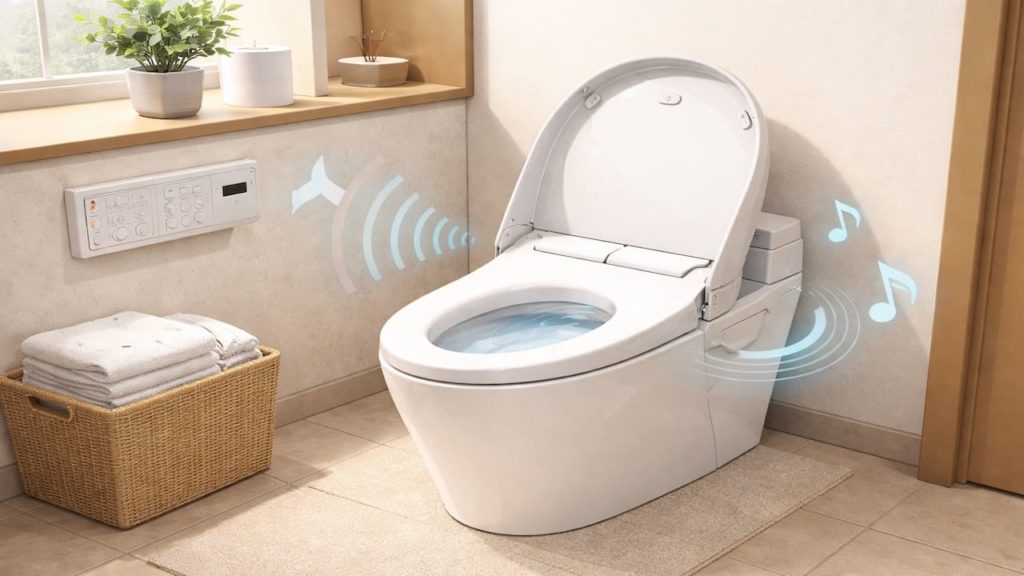
Older users do best with the simplest path, because surprise pressure or heat makes them tense—then posture breaks. Keep the remote simple and the seat steady. In many Japanese homes, the toilet room is narrow, so less movement is safer.
Some TOTO manuals warn that another person should set the seat heater off for elderly users who cannot adjust temperature well. According to eu.toto.com.
- Show Stop button location before anything else
- Set water pressure to the lowest level
- Set seat temperature to off for safety
- Place feet flat and keep hips centered
- Do one short test then press Stop
You might think they should learn every feature, but that overwhelms them fast. Start with one safe routine, then add comfort features later. Calm beats clever.
2. Choose gentle settings and stable posture
Comfort comes from posture first then settings.
If they lean forward or perch on the edge, the seat sensor can misread and the spray aim feels wrong—then they flinch. Stable posture also reduces twisting, which is a big deal for older knees and backs. In Japan, toilet slippers and small floor space make wobbling feel worse.
Some manuals note the unit may not operate unless the user sits properly on the seat. According to TOTO USA.
- Ask them to sit back on seat fully
- Keep elbows close and avoid leaning forward
- Use Rear wash only for the first week
- Keep nozzle position centered not extreme
- Reduce water temperature if skin is sensitive
You may worry the Washlet itself is risky, but most risk comes from surprise and movement. Remove surprise, reduce movement, and it becomes easy. Simple comfort.
3. Why older users feel unsafe on a Washlet
They feel unsafe when the body tenses and balance shifts.
Older users often brace their legs when they expect a strong spray, and that changes posture. They may also twist to reach paper, then lose stability in the moment that matters—shared Japanese toilet rooms are tight. Heat can also be tricky if they sit longer than they think.
- Notice flinching when water starts suddenly
- Notice leaning forward to watch the panel
- Notice twisting to grab paper behind them
- Notice sitting too long with warm seat
- Notice rushing because the room feels cold
It is not weakness, it is a predictable reaction pattern. If you remove the triggers, confidence grows fast. Safety is a feeling first.
4. How to set a senior friendly Washlet routine
Teach one short routine they can repeat without thinking.
Do this together the first few times, then let them do it solo. Keep it boring and consistent—Japan apartments often have limited grab points and little room to adjust. cost is mostly time/effort. Your goal is fewer movements, not more features.
- Place paper within reach before sitting down
- Press Rear then wait one second calmly
- Lower pressure one step if they tense
- Press Stop then pat dry with paper
- Stand up slowly then hold wall if needed
You might think the dryer will solve everything, but drying can be slow and makes them sit longer. A gentle wash plus a small pat is usually the best balance. If you did this and it still fails, next is adding a stable support point like a handrail.
5. FAQs
Q1. Should older users turn off the heated seat?
Yes start with seat heat off for long sits—it reduces the chance of low temperature burns and keeps the setup simple. If they want warmth later, use the lowest setting and keep sitting time short.
Q2. What water pressure should they start with?
Start at the lowest pressure and increase only if they ask for more. Comfort matters more than “strong clean” for older skin.
Q3. What if the spray aim feels wrong?
Have them sit back fully and keep hips centered, then try again. Many issues are posture and seat sensor timing, not a broken unit.
Q4. Is the dryer better than toilet paper for seniors?
Not always, because dryer time can keep them seated longer and uncomfortable in Japan’s colder seasons. A quick pat with paper after Stop is often simpler.
Q5. What is the safest way to stand up after washing?
Press Stop first, then stand up slowly with feet planted. If they feel unsteady, add a support habit like touching the wall or a stable grab point.
Pro's Tough Talk

I’ve spent 20+ years working around Japanese homes, so I’ve seen what tends to work—and what tends to go wrong—in everyday use. I’ve been on site for 20+ years. I’ve worked on hundreds of jobs. In winter, that cold toilet room makes people rush and wobble.
Cause 1: you set pressure like it’s a power washer, so the body tenses and balance shifts. Cause 2: they lean forward to “see what’s happening,” like steering a bicycle by staring at the front wheel. Cause 3: you add too many features, and the remote turns into a TV remote with 80 buttons, so they freeze and then mash random ones. That moment when they twist to grab paper behind them. That moment when the spray starts and they lift their hips a bit.
Lower pressure and show Stop now. Move paper within reach today. Teach the slow stand up routine this weekend.
Make it gentle and repeatable and they will relax and posture stays stable. If you did this and it still fails, next is adding a handrail or support point and simplifying the button choices even more.
Seriously.
If you treat the Washlet like a roller coaster, don’t be shocked when they refuse to ride again.
Summary
Start with low pressure, simple buttons, and stable posture, then build comfort slowly. Focus on Stop, gentle wash, and a calm stand up in a small Japanese toilet room.
If they still feel unsafe, remove triggers like surprise pressure and twisting for paper. When stability is still shaky, treat it as a support problem and add a handhold plan.
Do the same simple routine for one week and confidence grows without lectures. Once it feels normal, you can adjust warmth and comfort in small steps.