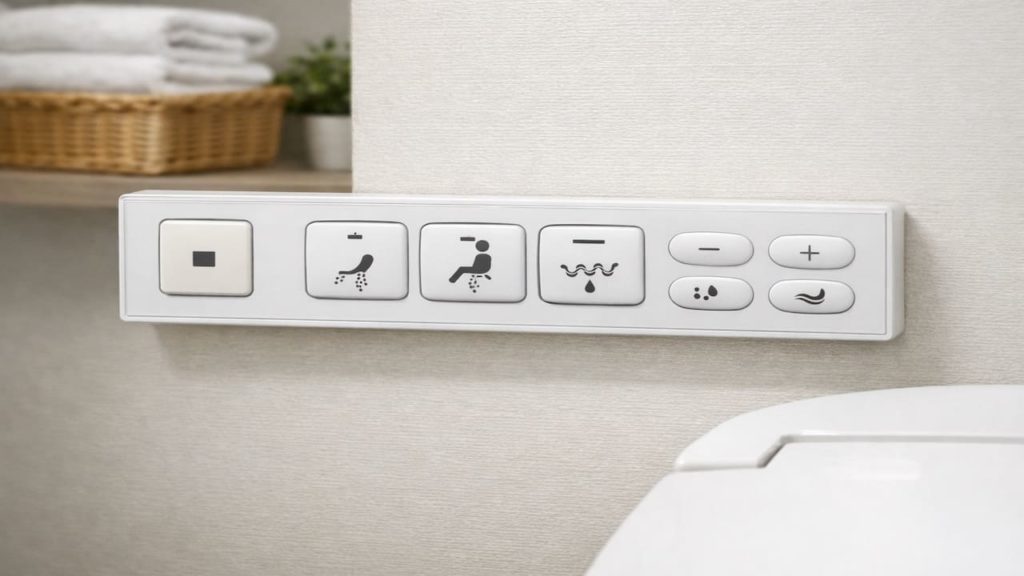
You want a simple hygiene routine for a Washlet, not a daily deep clean. You want the seat and remote panel to stay clean with one weekly session.
Grime builds quietly on touch points, then the plastic starts to look dull and sticky. In Japan, small toilet rooms and humid seasons make weekly wiping feel more necessary.
In this guide, you’ll learn a weekly Washlet routine that keeps the seat and panel clean. You will know what to wipe, what to avoid, and how to keep it safe.

Hi, I’m Ken — I’m Japanese, and I live in Malaysia long-term, so I explain everyday life in Japan from a practical ‘from abroad’ perspective.
I hold a building design qualification and I’ve been on site for 20+ years across hundreds of jobs. I turn Japan’s unspoken rules into simple checks, so you can avoid costly mistakes and take the next step with clear actions that feel safe.
1. Washlet hygiene routine: 5 steps
Weekly wiping beats waiting until it looks dirty.
The seat and panel collect skin oil, mist, and tiny splashes even when the bowl looks fine. A weekly routine keeps stains from setting and keeps buttons from feeling sticky — especially in Japan’s humid rainy season. The trick is gentle wiping, not harsh chemicals that can damage plastic.
Use a soft cloth with warm water and mild soap for regular cleaning. According to TOTO USA.
- Turn power off and keep hands fully dry
- Wipe remote panel with damp soapy cloth
- Wipe seat top and front edge carefully
- Wipe lid underside and hinge area gently
- Dry all surfaces with clean tissue
You might think paper wipes are enough, but dry rubbing can leave streaks and grind dust into plastic. Gentle soap and a wrung cloth remove oils faster and reduce smell sources. Keep it weekly and it stays easy.
2. Keep the seat and panel clean weekly
Clean touch points first then hidden edges.
Start where hands land, then move to the edges where grime hides. Hotel style “wipe what you touched” is good, but a weekly pass should also include seams and hinges. In Japan, toilet rooms often have limited airflow, so damp grime can linger longer.
Cleaning guides show regular deodorizer filter maintenance and exterior wiping as part of keeping the unit fresh. According to TOTO USA.
- Wipe flush button or lever with damp cloth
- Wipe paper holder bar and shelf surface
- Wipe seat bumpers and contact points gently
- Brush deodorizer filter with dry toothbrush
- Wipe wall near remote where fingers touch
You may worry the filter step is too much, but it takes seconds and prevents “why does it still smell” later. The goal is clean feel and stable operation, not perfect sterilization. Do it once a week and forget it.
3. Why weekly Washlet cleaning works
Weekly cleaning stops oil film before it hardens.
Plastic surfaces collect skin oil, then dust sticks, then moisture locks it in. After that, the panel can feel greasy and the seat can look dull. In Japan’s winter, toilet rooms can be colder, so moisture dries slower and film builds quietly.
- Check panel edges for sticky finger marks
- Check seat front edge for yellowing film
- Check hinge gaps for tiny splash traces
- Check lid underside for mist residue
- Check nearby floor for dried micro splashes
You might believe the bowl is the only hygiene issue, but most “dirty feeling” comes from touch points. Weekly wiping keeps the experience pleasant for everyone. It also reduces the urge to overuse strong sprays.
4. How to do the weekly routine safely
Use the right moisture level and avoid harsh sprays.
Keep water away from seams and do not drip anything into the unit. Wring your cloth hard, then wipe, then dry right away — this matters in Japan’s humid homes. cost is mostly time/effort. If you want extra cleaning power, use mild dish soap and rinse your cloth often.
- Unplug unit and keep cord away from water
- Use wrung cloth and wipe without pressing hard
- Avoid bleach ammonia and strong toilet cleaners
- Use cotton swab for hinge gap grime
- Finish by drying seams and button edges
You may think disinfectant spray is safer, but overspray can leave residue and can creep into seams. Drying is the difference between “clean” and “still weird.” If you did this and it still fails, next is checking for worn seals or calling for service.
5. FAQs
Q1. What is the minimum weekly cleaning I should never skip?
Wipe the seat top and the remote panel weekly because those are constant touch points. Do a fast dry finish so Japan humidity does not keep film sticky.
Q2. Can I use toilet bowl cleaner on the Washlet seat?
No, bowl cleaners are often too harsh for plastic and coatings. Keep bowl chemicals inside the bowl and wipe the seat separately with mild soap.
Q3. What cloth should I use for the panel and seat?
Use a soft cloth wrung out with water, plus a small amount of mild soap if needed. In Japan’s small toilet rooms, keep one cloth just for the seat and panel.
Q4. How do I stop the panel from feeling sticky?
Sticky usually means oil film and product residue. Wipe with mild soap, rinse your cloth, then dry the panel edges carefully.
Q5. How long should the whole weekly routine take?
About 5 to 10 minutes once you have a habit. The first time takes longer because you learn where the grime hides.
Pro's Tough Talk

I’ve spent 20+ years working around Japanese homes, so I’ve seen what tends to work—and what tends to go wrong—in everyday use. I’ve been on site for 20+ years. I’ve worked on hundreds of jobs. In Japan’s humid rainy season, weekly wiping is the difference between “nice” and “why is this sticky.”
Cause 1: people only clean when it looks dirty, so oil film hardens like dried syrup. Cause 2: they use strong sprays, and residue turns the panel into a glue trap. Cause 3: they never dry seams, so moisture stays and invites grime like a magnet at a paperclip party. It’s like polishing a phone screen with greasy hands. It’s like leaving a wet towel in a gym bag.
Turn power off and wring the cloth now.
Wipe the panel and seat top gently today.
Brush the filter and dry seams this weekend.
Keep it gentle and dry and you win. If you did this and it still fails, next is checking for worn plastic texture and replacing parts or getting a technician.
Come on.
If you keep “cleaning” with perfume sprays, your Washlet will smell fine and feel gross, which is kind of the worst combo.
Summary
Weekly wiping works because it removes oil film before it hardens on plastic. Focus on the seat top, the panel, and the hinge edges.
Use a wrung soft cloth with mild soap, then dry everything so moisture does not linger. If it still feels dirty after a week, treat it as residue or wear, not “bad hygiene.”
Do the 5 step weekly routine once this week and the Washlet will stay comfortable for guests and family. After that, it becomes a quick habit, not a chore.