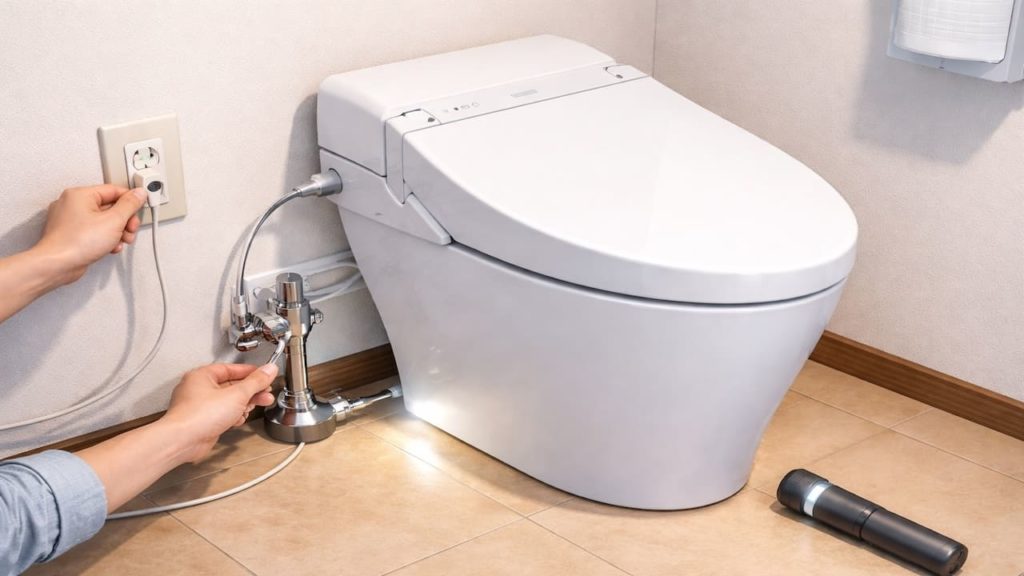
Using a Washlet can cut toilet paper, but it can also feel confusing at first. You wash, then you still reach for paper, and you wonder if you are doing it wrong.
Most “waste” comes from wiping like it is a dry toilet routine. In Japan, humid summers and small toilet rooms make drying slower and people overuse paper.
In this guide, you’ll learn use just enough paper without feeling damp with five practical tips. You will also learn how to avoid habits that cause clogs and messy cleanup.

Hi, I’m Ken — I’m Japanese, and I live in Malaysia long-term, so I explain everyday life in Japan from a practical ‘from abroad’ perspective.
I hold a building design qualification and I’ve been on site for 20+ years across hundreds of jobs. I turn Japan’s unspoken rules into simple checks, so you can avoid costly mistakes and take the next step with clear actions that feel safe.
1. Washlet paper use: 5 tips
Pat dry beats wiping and saves paper fast.
After a Washlet rinse, you are already clean, so wiping hard just creates paper fuzz and waste — and it can irritate skin. In Japan’s humid season, air feels sticky, so people panic-dry and use too much paper. Start with a calm “pat” habit and you will use less without feeling wet. Less waste.
Using a Washlet can reduce toilet paper use and lower the risk of clogs from excess paper. According to TOTO USA.
- Pat dry gently with two to four sheets
- Fold paper twice to add thickness
- Use short pats not long wiping strokes
- Wait five seconds before final pat
- Stop once paper comes away mostly dry
You might think “more paper means cleaner.” It does not, because the cleaning already happened with water. Too much paper mostly creates lint, friction, and waste. Keep it light and repeatable, and your routine feels normal. Calm control.
2. Balance cleaning and drying without waste
Use paper for drying not for scrubbing.
Separate the job in your head: water cleans, paper dries. In Japan apartments, ventilation can be weak, so a tiny damp feeling lingers and makes you reach for more paper. Do a quick rinse, then pat, then let airflow finish the last bit. Small change.
Many bidet guides recommend pat drying with a few squares of toilet paper rather than wiping, since you are already clean. According to Brondell.
- Lower spray pressure to reduce water leftover
- Aim spray precisely to avoid extra wet area
- Use warm air dry if your model has
- Pat front to back to reduce spread
- Flush once after patting to avoid rewet
You may worry warm air drying takes too long. That is true on some models, so treat it as a “finish” step, not the whole drying job. If you pat first, the dryer feels faster and you waste less paper. Simple math.
3. Why people waste paper after a Washlet
Waste happens when the seat routine stays old.
People bring the dry toilet habit into a wet-clean routine, and they keep wiping like nothing changed — that is the core mistake. In Japan’s winter, thicker clothes and rushed posture also make you feel less “done,” so you over-dry. Add nervousness about hygiene, and paper disappears fast. Habit mismatch.
- Notice if you wipe hard out of habit
- Track paper use when you feel rushed
- Check if spray area is larger than needed
- Compare paper use in winter versus summer
- Watch for paper fuzz sticking to damp skin
You might think you must be perfectly dry instantly. That pressure makes you use more paper than needed, especially in humid air. The goal is comfortable, not bone-dry in one second. Reset the target. Comfort first.
4. How to balance cleaning and drying with less paper
Use a fixed sequence and stop at the signal.
Pick a sequence you can repeat half-asleep, because Japan nights and early mornings are when waste spikes. Rinse with steady aim, pause, pat, then optional warm air, then one final pat — done. cost is mostly time/effort. If you always stop when the paper comes away mostly dry, you won’t chase the last one percent. Repeatable.
- Choose one spray mode and keep it
- Reduce spray time to ten seconds max
- Pause briefly to let water drip off
- Pat dry with folded paper only
- Use one final pat then stop
You may want to “optimize” every setting daily. That usually increases waste because you are experimenting while drying. Keep the sequence stable for a week and let your body learn the new normal. Then adjust only one setting. Steady progress.
5. FAQs
Q1. How many sheets should I use after a Washlet?
Start with two to four sheets and fold them for thickness. Increase only if you truly feel wet after a short pause.
Q2. Should I wipe or pat dry?
Pat dry is usually enough. Wiping hard often causes paper fuzz and irritation, especially when the air is humid.
Q3. Why do I feel damp even after patting?
Spray time may be too long or the area may be wider than needed. In Japan summer humidity, the last bit takes longer to evaporate.
Q4. Does warm air drying reduce paper use?
Yes, especially if you pat first and let the dryer finish. Think of it as a quiet helper — not a full replacement.
Q5. What causes clogs with Washlet use?
Usually it is too much paper, not the rinse water. If you pat with a small amount and flush normally, you reduce risk.
Pro's Tough Talk

I’ve spent 20+ years working around Japanese homes, so I’ve seen what tends to work—and what tends to go wrong—in everyday use. People treat toilet paper like a panic button, then wonder why the bowl complains later. This is fixable.
Three causes. First, you wipe like you are sanding wood, so paper turns into fuzz and you keep adding more. Second, you over-spray, so you create a bigger wet zone and then “need” more paper. Third, you chase perfect dryness like it is a job interview, and you burn through rolls like a slot machine eating coins. You know that scene where you keep folding more paper, then the wad feels thicker than your wallet. And you know that scene where you flush twice “just in case” and pretend it is normal.
Pat dry lightly right now.
Cut spray time and pause today.
Set one routine and stop chasing dryness this weekend.
Water cleans and paper finishes. If you did this and it still fails, next is using the warm air dryer or adjusting spray aim and pressure for your body.
Seriously, your toilet is not grading your dryness. Keep wasting paper and you’ll end up budgeting for tissue like it is rent.
Summary
Use paper to pat dry, not to scrub, because the Washlet already did the cleaning. A short pause plus a folded pat cuts waste fast.
If you keep wasting paper, the cause is usually old habits, too much spray time, or chasing perfect dryness. Use a fixed sequence and stop when paper comes away mostly dry.
Pat then stop when it is mostly dry. Do that today, and your routine stays comfortable in Japan’s seasons without turning toilet paper into a hobby.