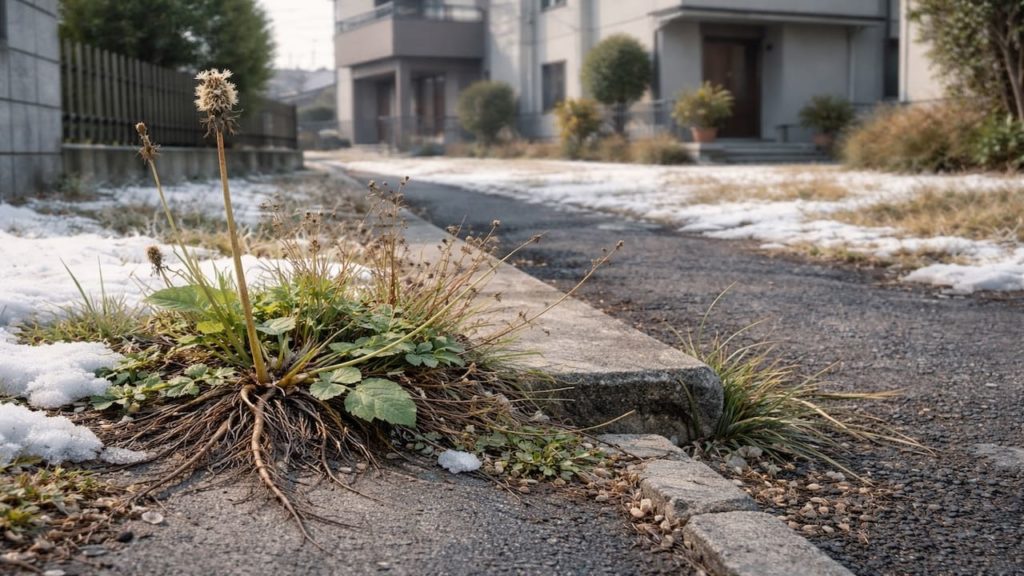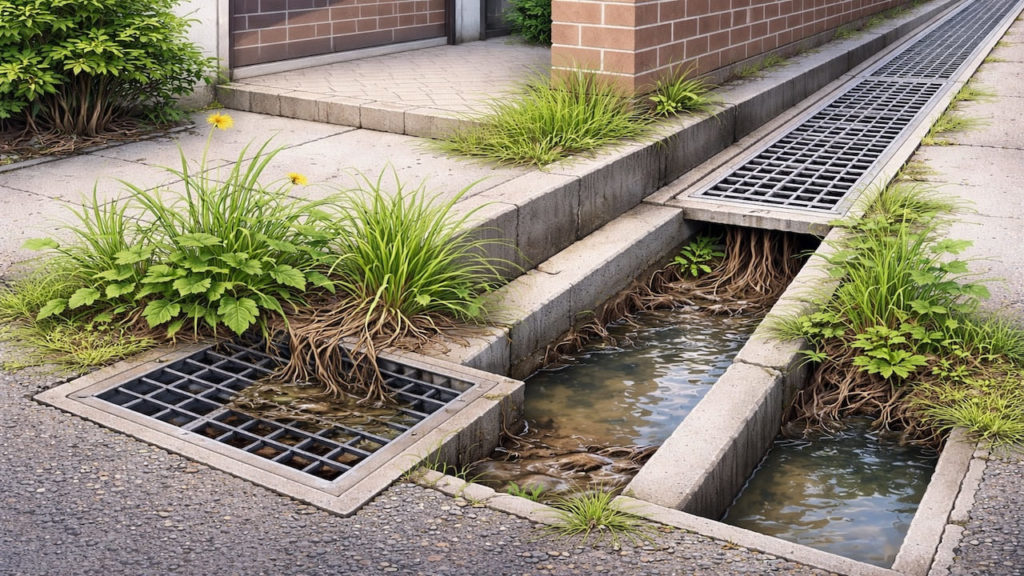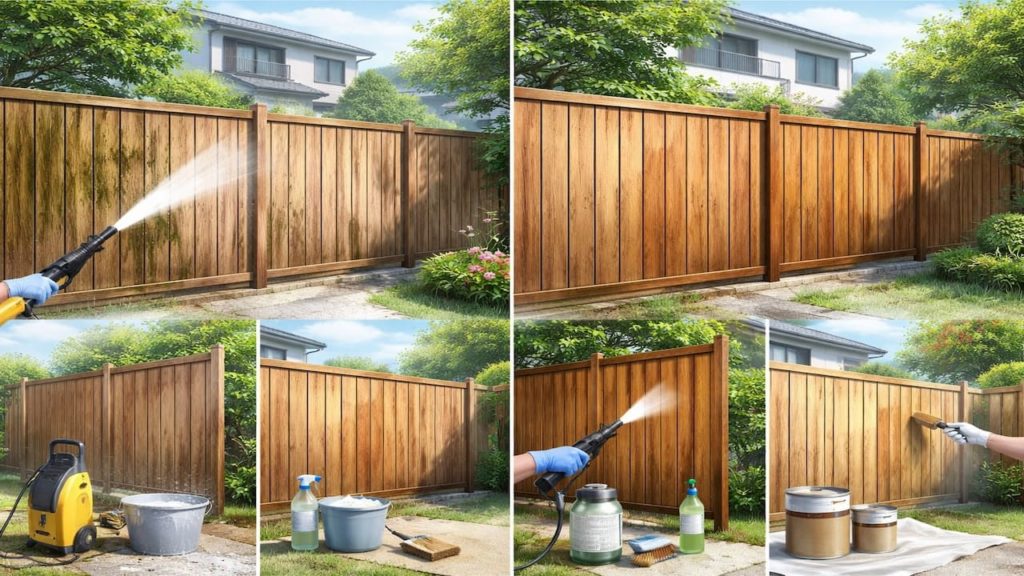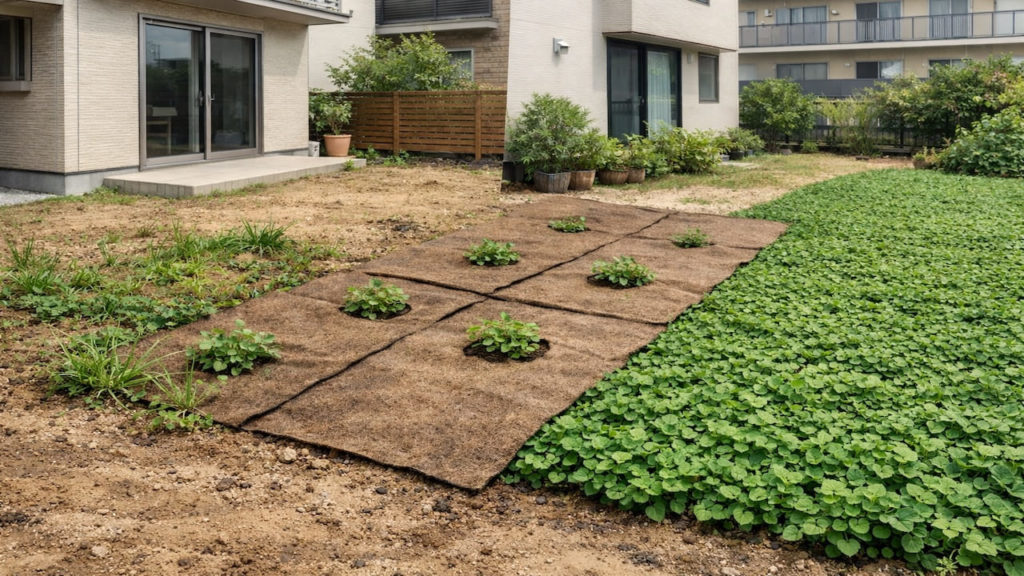
You look at bare soil and think it will stay “clean” for a while. Then weeds show up like they were waiting behind the fence.
Bare soil is an open invitation for seeds, and rain splashes them into perfect spots. In Japan, humid summers and sudden showers keep the top layer active and ready to sprout.
In this guide, you’ll learn how to cover bare soil fast so weeds cannot take over. You’ll also learn which cover choices work best for tight Japanese yards and messy seasons.

Hi, I’m Ken — I’m Japanese, and I live in Malaysia long-term, so I explain everyday life in Japan from a practical ‘from abroad’ perspective.
I hold a building design qualification and I’ve been on site for 20+ years across hundreds of jobs. I turn Japan’s unspoken rules into simple checks, so you can avoid costly mistakes and take the next step with clear actions that feel safe.
1. Weeds on bare soil 5 tips to cover fast
Cover bare soil quickly because sunlight is the trigger—leave it open and you are basically planting weeds on purpose.
Bare soil warms up, dries, then gets wet again, and that cycle wakes seeds and root bits. In Japanese homes, narrow side strips and splash zones near eaves stay damp longer. Even “just a few days” is enough for a first wave. Fast cover beats perfect cover.
- Rake flat and remove roots before covering
- Cover right after weeding not next week
- Block light with thick layers not dust
- Seal edges so wind cannot peel cover
- Inspect after rain and fix lifted spots
Some people say weeds prove the soil is “healthy.” Maybe, but you did not ask for a weed farm. If you want clean edges and less mowing in Japan’s rainy months, you must deny light and stop seed contact. Start simple and keep it tight.
2. Mulch mats and groundcover
Pick the cover that matches your mess level—some covers hide weeds, others actually stop them.
Mulch works best when it is thick and stays put, but thin scatter mulch becomes weed food fast. Mats block light well, but only if you overlap seams and pin edges, especially in windy balcony-side yards. Groundcover plants can win long term, yet they need time and watering, which matters in Japan’s hot humid stretch. Choose what you will maintain.
- Use mulch thick enough to hide soil
- Overlap mats so seams do not open
- Pin mat edges tight along hard borders
- Plant groundcover where you can water easily
- Combine mat plus mulch for fastest results
People argue about “best” like there is one magic product. The truth is the best cover is the one you install correctly and check after storms. If your area gets runoff or foot traffic, go tougher. If it is a calm bed, plants can carry it.
3. Why bare soil turns into a weed magnet
Weeds love bare soil because it is open moist and bright—it is the easiest start line in the yard.
Seeds land everywhere, but they only win when they touch soil and get light. Bare soil also crusts after rain, then cracks as it dries, creating tiny pockets for new seedlings. In Japan, spring pollen dust and summer storms drop a steady mix of grit and seeds into those pockets. It adds up fast.
- Rain splashes seeds into fresh soil gaps
- Sun warms surface and speeds seed waking
- Dry cracks create mini seed shelters
- Foot traffic presses seeds into contact fast
- Runoff piles debris at edges and corners
It is tempting to keep soil bare because it looks tidy for one day. Then the first green hairs appear, and you are back to pulling. The fix is not stronger pulling. The fix is removing the conditions weeds need.
4. How to cover bare soil fast and make it last
Do a quick reset then lock it with a layered cover—you want zero light and zero exposed seams.
First, pull weeds and rake the soil flat, then remove visible roots and thick debris that creates bumps. Next, lay a mat with overlaps, pin edges, and cover it with mulch or gravel to protect it from UV and wind. For a basic setup, expect ¥3,000–12,000 depending on area size and materials. According to www.dcm-ekurashi.com.
- Rake soil flat so mats sit flush
- Overlap seams and pin every loose edge
- Top mats with mulch to protect and hide
- Water groundcover deeply until roots grab firmly
- Patch small openings before weeds build momentum
Some folks skip pins and say mulch will hold the mat. Then wind lifts a corner, rain slips under, and weeds pop through the seam. If you want it to survive Japanese typhoon gusts and rainy season wash, treat edges like the whole project. Lock them down, then relax.
5. FAQs
Q1. Is mulch alone enough on bare soil?
It can be if you lay it thick and keep it from sliding away. Thin mulch turns into weed food and you will be disappointed fast.
Q2. Should I cover soil right after weeding?
Yes, because exposed soil is when new seeds land and sprout. Do it the same day—waiting a week is how the cycle restarts.
Q3. What is the fastest option for a small strip?
A weed mat with overlapped seams is the fastest. Add a thin top layer to protect it and stop edge lift.
Q4. Do groundcover plants stop weeds immediately?
Not immediately, because they need time to fill in and shade the soil. Use a temporary cover between plants so weeds do not claim the gaps.
Q5. Why do weeds still appear after covering?
Usually it is a seam, an edge, or a thin spot where light hits soil. Find the opening, patch it, and the problem calms down.
Pro's Tough Talk

I’ve spent 20+ years working around Japanese homes, so I’ve seen what tends to work—and what tends to go wrong—in everyday use. Bare soil is not “neutral,” it is a welcome mat for weeds, especially in rainy season.
Here’s the brutal truth. Seeds hit open soil, sunlight flips the switch, and moisture seals the deal. If you spread a thin layer and call it done, weeds treat it like a cheap blanket and push right through. It’s like putting a screen door on a submarine.
Weed and rake the area flat. Cover it the same day with something that blocks light. Lock the edges so wind cannot pry it up.
If weeds return the cover is not sealed. Check seams, corners, and borders, then patch before the green turns into a carpet. This is not a “try harder” job, it is a “close the gaps” job.
Seriously. You left soil naked and acted shocked.
Summary
Bare soil turns into weeds because seeds get light and easy contact. Covering fast is the real shortcut, not endless pulling.
If weeds keep appearing, it is almost always an edge, seam, or thin spot. Patch those openings early and the whole area settles down.
Today cover the soil and lock every edge tight. Once it holds through rain, you can expand the same method to other strips and beds.