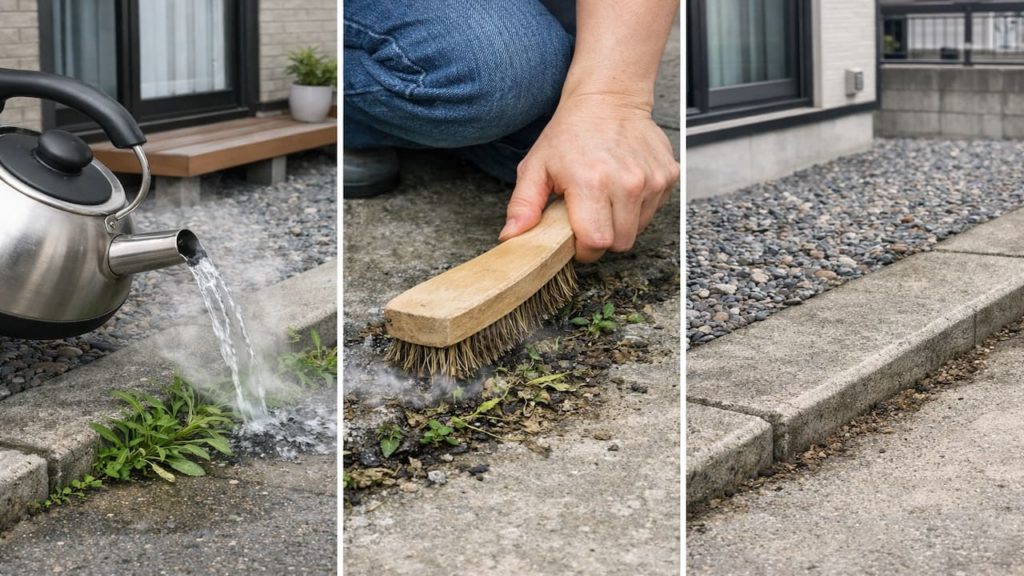
You look down at driveway or patio cracks and see weeds poking through like they own the place. You want them gone fast, not a whole weekend project.
Crack weeds come from trapped grit, moisture, and tiny pockets of soil that keep refilling after rain. In Japan, tsuyu humidity and narrow home edges make those cracks stay damp longer than you think.
In this guide, you’ll learn how to clear weeds in cracks quickly and stop the comeback. You’ll use scrape, rinse, dry, and seal steps that fit Japanese sidewalks, small yards, and tight entry paths.

Hi, I’m Ken — I’m Japanese, and I live in Malaysia long-term, so I explain everyday life in Japan from a practical ‘from abroad’ perspective.
I hold a building design qualification and I’ve been on site for 20+ years across hundreds of jobs. I turn Japan’s unspoken rules into simple checks, so you can avoid costly mistakes and take the next step with clear actions that feel safe.
1. Weeds through cracks 5 steps to clear them fast
Fast crack weed clearing is a simple sequence not a single trick—skip one step and you’re basically inviting a rerun.
Cracks hold grit like a tiny planter, so pulling the green top is not enough. If you clear, rinse, dry, and then seal, you remove both the plant and its fuel. In Japan, wet seasons keep the crack damp, so speed matters but dry time matters more. One clean reset beats five lazy pulls.
- Scrape weeds out down to the crack base
- Rinse to flush grit and loose root pieces
- Let the crack dry fully before sealing
- Pack filler deep so air gaps stay minimal
- Recheck after first rain and patch misses
Some people swear by “just pour hot water and done.” That can knock weeds back, but grit stays and seeds return. The five-step flow is what makes the result stick. Do it once properly, then maintenance becomes tiny.
2. Scrape rinse dry and seal
Scrape and rinse remove the hidden soil that keeps weeds alive—drying and sealing are what stop the next sprout.
Use a narrow scraper or old flat tool to dig out the crack, then brush to lift packed dust. Rinse hard enough to move grit, not just wet it, then let sunlight and airflow finish the job in a Japanese entryway where shade is common. If you seal while it’s still damp, you trap moisture and the filler fails early.
- Scrape with a thin tool to reach deep
- Brush the crack line to loosen fine dust
- Rinse until runoff water looks mostly clear
- Dry for a full day in good weather
- Seal from the bottom up and press firmly
It’s tempting to rinse and immediately seal because you’re tired. That shortcut is why sealant peels or weeds sneak through weak spots. Let it dry, then seal like you mean it. Your future self will be smug.
3. Why weeds keep returning through cracks
Weeds return because cracks refill with grit and stay moist—the crack becomes a repeating mini flowerpot.
Wind drops dust, shoes grind it in, and rain packs it tight, so the crack keeps rebuilding “soil.” Roots also leave fragments, and those fragments regrow when moisture returns. In Japan, tsuyu and late-summer showers keep the crack damp, especially along walls and under eaves where air barely moves. That’s why the same line sprouts again.
- Dust and sand refill cracks after every storm
- Foot traffic compacts grit into root-friendly pockets
- Moist shade zones keep cracks wet longer
- Root fragments survive when pulled from the top
- Seeds settle into low seams and corners
People blame “strong weeds” like it’s a personality issue. It’s just habitat and repetition. Break the habitat by removing the grit and sealing the gap. Then weeds have nowhere to restart.
4. How to clear cracks safely and seal for longer
Clear deep then seal tight so light and soil cannot return—that’s the whole long-game.
After scraping and rinsing, wait until the crack is dry to the touch all the way down, then apply a crack filler or repair compound in layers. Basic filler for small home cracks is often around ¥500–800 per small pouch.Similar concrete repair items show a comparable range like ¥600–700 in online listings. In Japan’s humid months, plan your sealing on a dry stretch so curing isn’t fighting constant moisture.
- Pick a dry day and keep the area rain-free
- Push filler deep to remove air voids
- Smooth the surface so water cannot pool
- Keep people off until curing feels firm
- Patch tiny holes before weeds find them
Some people seal over half-clean cracks and get mad later. If dirt stays inside, you just sealed a weed nursery under a lid. Clean deeper than you think, then seal, then watch the first rain like a test. If one spot fails, patch it fast before it becomes a new crack garden.
5. FAQs
Q1. Can I just pull weeds without sealing the crack?
You can, but the crack will keep refilling with grit and seeds. Pulling alone is maintenance forever, not a fix.
Q2. Is boiling water enough for crack weeds?
It can collapse the top growth, but roots or grit can still survive. It works best as a helper step, not the final move.
Q3. How long should I let cracks dry before sealing?
Dry until the crack feels dry deep down. If the surface is dry but the base is damp, the seal can fail early.
Q4. What if the crack is under constant shade?
Then drying takes longer and weeds return faster. Clear on a sunny day if you can, and give it extra time to dry—rushing is the trap.
Q5. When should I call a pro instead?
If cracks are widening, sinking, or spreading across large areas, don’t just patch weeds. That can be a surface issue that needs a proper repair approach.
Pro's Tough Talk

I’ve spent 20+ years working around Japanese homes, so I’ve seen what tends to work—and what tends to go wrong—in everyday use. Crack weeds are not “plants,” they’re squatters with a lease written in dirt.
Here’s the ruthless truth. You pull the green, but the crack still holds grit, so you basically left a tiny farm bed behind. It’s like shaving a beard with a spoon, then acting shocked it grew back.
Scrape deeper than you want to. Rinse until the crack stops bleeding mud. Dry it fully, then seal it tight.
If weeds return in the same line, the crack still has soil or a missed gap. Scene one: you’re late for work, stepping over the same sprout at the entry again. Scene two: you’re sweeping the driveway and the broom keeps catching that one cursed seam.
Bruh.
Summary
Crack weeds keep coming back because grit and moisture rebuild a tiny growing bed in the seam. The fast win is scrape, rinse, dry, and seal in order.
If you skip drying or leave dirt inside, sealing fails and weeds restart. Patch misses right after the first rain and the line stays calm.
Today scrape one crack line clean and seal it after it dries. Once you see how much easier it stays, use the same method on the next seam and save your weekends.