You spot weeds creeping around a drain grate, and you already know what comes next. One hard rain and the water starts pooling like the yard forgot how to breathe.
Near drains, weeds are only part of the problem, because roots trap silt and leaves and turn into a clog starter. In Japan, tsuyu humidity and sudden downpours make small drain blockages show up fast.
In this guide, you’ll learn how to keep weeds near drains from turning into a clog mess. You’ll check roots, silt, and runoff so water keeps moving and your cleanup stays simple.

Hi, I’m Ken — I’m Japanese, and I live in Malaysia long-term, so I explain everyday life in Japan from a practical ‘from abroad’ perspective.
I hold a building design qualification and I’ve been on site for 20+ years across hundreds of jobs. I turn Japan’s unspoken rules into simple checks, so you can avoid costly mistakes and take the next step with clear actions that feel safe.
1. Weeds near drains 5 checks to avoid clogs
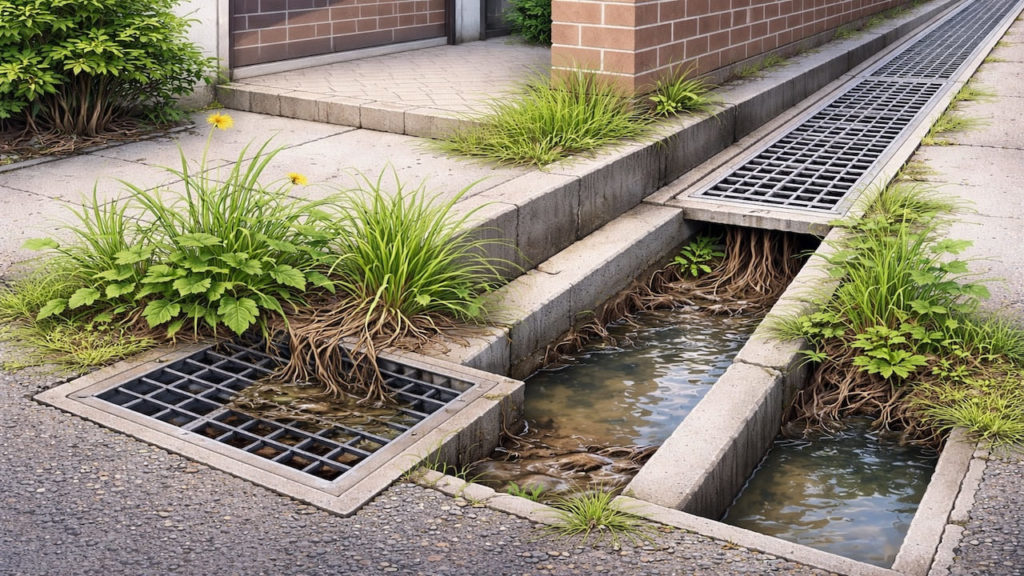
Check the drain edge and clear the “weed ring” early—that ring is where clogs are born.
Weeds grow where water and fine dirt collect, which means the drain is already catching debris. Roots knit silt together and make a stubborn plug that normal rain cannot flush out. In Japan, small side yards and narrow paths channel runoff into one spot, so a little blockage turns into pooling fast. Quick checks beat emergency scooping.
- Look for weeds forming a tight ring
- Lift the grate and inspect the inlet edge
- Check for silt shelves built up inside
- Watch runoff paths after a short rain
- Remove leaf mats before they turn muddy
Some people think weeds near drains are “just cosmetic.” They are not, because they signal trapped dirt and slow flow—fix the conditions and the weeds calm down too. Do these checks once a week in rainy season and you stay ahead.
2. Roots silt and runoff
Roots plus silt create a plug that water cannot break—runoff just presses it tighter.
Roots act like a net, silt acts like glue, and runoff delivers more material right into that net. If the area is shaded by walls or fences, the wet layer lingers and turns soft, which lets weeds spread faster. In Japan, typhoon rains can hit suddenly, so you want the drain clear before the forecast gets spicy. Wet grit. Always.
- Pull weeds by the crown not the leaves
- Scoop silt out instead of rinsing it deeper
- Keep runoff from dumping soil at one point
- Brush the grate slots so water can enter
- Clear the upstream edge where debris first collects
People love to blast everything with a hose and call it “clean.” That often pushes silt deeper and builds a harder shelf—remove the solids first, then rinse lightly. Control the runoff path and you cut the refill speed.
3. Why weeds near drains cause clogs in Japan
Weeds cause clogs because they trap debris right at the inlet—the drain becomes a filter you never asked for.
Leaves, small trash, and soil collect at grates and catch basins, and weeds help hold that pile in place. City guidance warns that when rainwater catch basins clog with leaves and trash, drainage worsens and road flooding can happen. According to www.city.chiba.jp. Another city notes that when rainwater catch basins around roads or properties clog with leaves and garbage, it can contribute to flooding, so cleaning before heavy rain matters. According to water.city.sakai.lg.jp.
- Weeds hold leaf mush like a wet sponge
- Roots bind silt into a firm shelf
- Grate slots narrow when grime coats the edges
- Runoff piles debris where slope meets drain
- Shade keeps the inlet damp and sticky longer
Some folks blame the drain design and give up. Most home clogs are simple buildup, not engineering failure—remove the trap material and keep the inlet dry and open. Japan’s rain patterns punish slow drainage, so the small habits matter.
4. How to clear weeds near drains and prevent clogs
Clear solids first then reset the inlet so it stays open—don’t rinse problems deeper.
Pull weeds low at the crown, then scoop silt and leaf mush into a bucket before you add any water. Brush the grate slots and the inlet lip, then rinse lightly to confirm flow and reveal any remaining shelf. For a stiff brush, small scoop, and gloves, plan ¥300–1,500 once, then the routine is quick. In Japan’s rainy season, do this before the next big rain window, not after.
- Lift the grate and remove weeds at roots
- Scoop silt shelves out into a bucket
- Brush slots and the inlet lip clean
- Rinse lightly and watch water enter fast
- Add a small gravel border to reduce mud wash
Some people want a single “spray and forget” solution. That fails because runoff keeps delivering new silt—stop the delivery by cleaning upstream edges and reducing bare soil near the drain. If water still pools after a full clean, you may have a slope or subsurface blockage, and that’s when you escalate beyond weeds.
5. FAQs
Q1. Is it okay to pull weeds and leave the soil near the drain?
Leaving loose soil makes silt wash straight back into the inlet. After pulling, tidy the edge and remove the soft mud layer so it cannot refill the grate.
Q2. Should I hose the drain area hard to clean it?
A hard blast can push silt deeper and build a tougher shelf. Scoop and brush first, then rinse lightly so you can see flow clearly.
Q3. What is the fastest weekly routine?
Brush the grate and remove leaf mats before rain. If you do that, the drain stays open and weeds lose their damp food pile.
Q4. Why does it clog again even after cleaning?
Usually runoff is bringing new silt from bare soil or a muddy edge. Fix the upstream dirt source and the refill rate drops—fast.
Q5. When should I worry it is more than weeds?
If the inlet is clean but water still backs up, the pipe or deeper pit may be blocked. That is when you stop guessing and get a proper check.
Pro's Tough Talk

I’ve spent 20+ years working around Japanese homes, so I’ve seen what tends to work—and what tends to go wrong—in everyday use. In tsuyu, a “small” drain clog turns into a puddle party overnight.
Here’s the brutal truth. Weeds are the bouncer, roots are the net, and silt is the cement, so the drain becomes a tiny prison for every leaf that drifts by. You think you’re fighting weeds, but you’re really fighting the little mud dam you accidentally built. It’s like trying to breathe through a mask stuffed with wet tissue.
Pull the weeds low and slow. Scoop the silt out, don’t wash it deeper. Brush the grate slots until they look sharp again.
If water still pools after a clean inlet, the problem is downstream. Picture this: you’re in sandals, poking the grate with a stick while rain starts again. Another scene: you’re carrying groceries, step into the “mystery puddle,” and your sock makes that sad squish sound.
Bruh.
Summary
Weeds near drains are a clog warning because roots trap silt and debris at the inlet. The key checks are the weed ring, silt shelves, and runoff paths.
If you only yank the green tops, clogs return because the mud shelf stays. Clear solids first, brush the inlet, then reduce the dirt feeding the drain.
Today lift the grate and remove the silt shelf completely. Once flow is back, keep the inlet clean before rain and your yard stays calm.