You clean the yard, then you look along the fence line and it still looks messy. Weeds at the base make the whole boundary feel unkept fast.
Fence edges collect windblown dust and leaves, and shade keeps the strip damp, so weeds love it. In Japan, narrow side yards and rainy season humidity make fence-line regrowth feel nonstop.
In this guide, you’ll learn how to keep fence lines clean by trimming the base and blocking light. You’ll also learn small habits that work in tight Japanese home edges without turning into a weekly punishment.

Hi, I’m Ken — I’m Japanese, and I live in Malaysia long-term, so I explain everyday life in Japan from a practical ‘from abroad’ perspective.
I hold a building design qualification and I’ve been on site for 20+ years across hundreds of jobs. I turn Japan’s unspoken rules into simple checks, so you can avoid costly mistakes and take the next step with clear actions that feel safe.
1. Weeds around fences 5 tips to keep lines clean
Clean fence lines come from controlling the strip not chasing weeds—make the base unfriendly and maintenance stays easy.
Weeds return where soil and moisture sit still, and fence lines are perfect traps for that. If you trim low and remove the soil film, the strip stops feeding new sprouts. In Japan, fence corners and gaps near gates stay shaded and damp, so you need a method that works even when the sun doesn’t. Crisp line, calm yard.
- Trim weeds low to expose the fence base
- Pull crowns from edges before they seed
- Brush away leaf mats that turn into soil
- Rake the strip so dirt cannot build up
- Check corners where shade stays wet longer
Some people say “it’s just a little green.” That little green turns into a seed factory and spreads along the whole line. If you keep the base clean early, the job stays small. It’s about keeping control, not being perfect.
2. Trim base block light
Block light at the fence base and weeds lose their power—light plus dirt is the only reason they win.
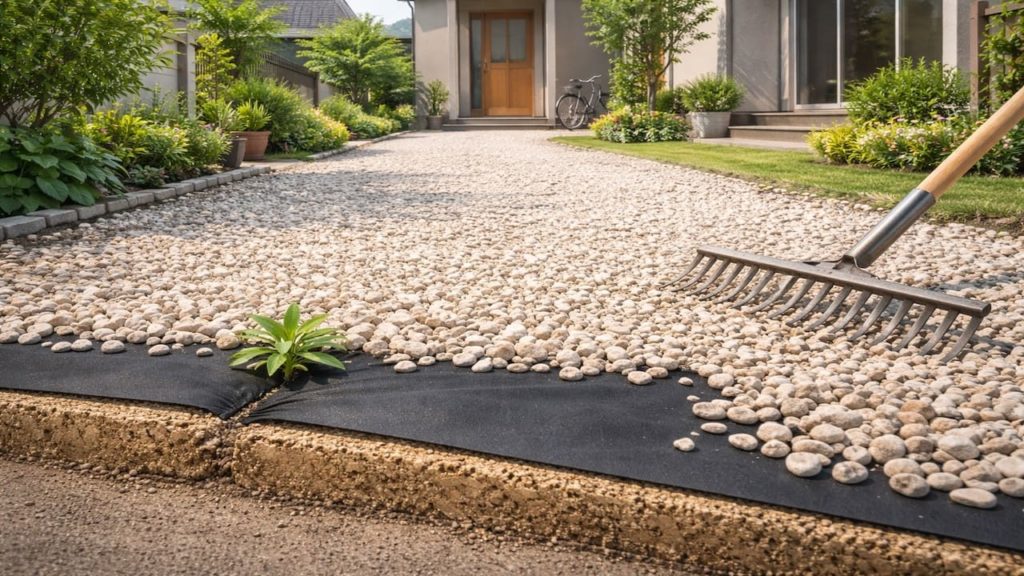
Trimming is the quick reset, but blocking light is what reduces repeat work. A narrow strip of weed fabric with gravel, or even a mulch band, can shut down most sprouts if edges are sealed. In Japan’s rainy season, fine silt washes into fence strips, so gravel helps keep the surface drier than bare soil. The key is keeping the band continuous with no gaps.
- Install a narrow barrier strip along the fence
- Overlap seams so sunlight cannot reach soil
- Top with gravel to protect and speed drying
- Keep a small air gap for fence drainage
- Remove soil film that forms on top
You might think a thin mulch sprinkle is enough. It isn’t if you can still see soil through it. If you want fewer weeds, you need a real light block and a surface that doesn’t turn into mud. Do it once and your trimming becomes rare.
3. Why fence lines get weedy so fast
Fence lines grow weeds because they trap debris and stay shaded—they are natural dust gutters.
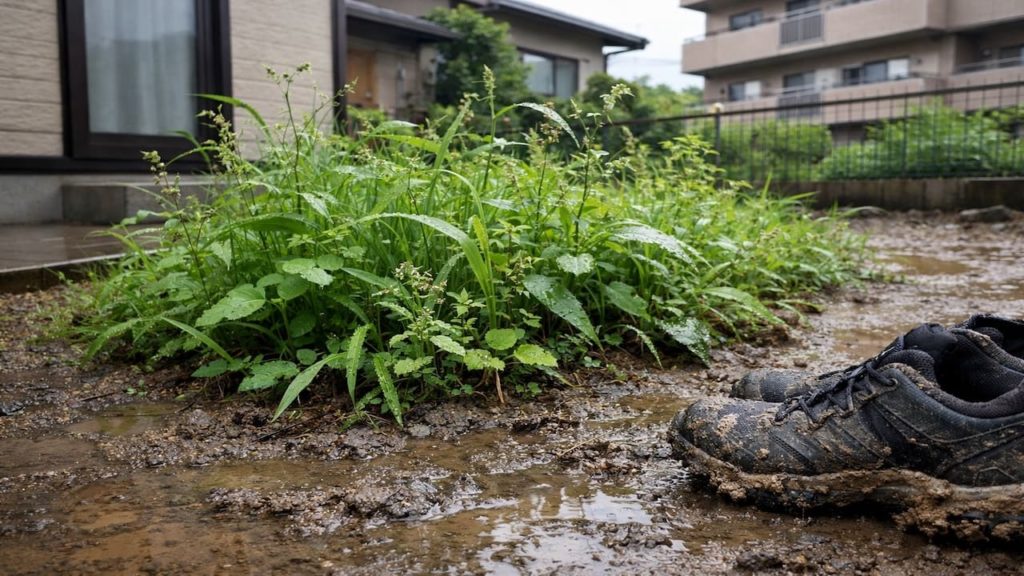
Wind pushes leaves and dust against fences, and rain packs it into a thin soil layer. Shade slows drying, so that layer stays moist longer and seeds germinate easily. In Japan, tight side passages also mean less airflow, which makes the base damp and friendly to weeds. That’s why the same strip keeps coming back.
- Wind piles leaves against the fence base
- Rain packs dust into a thin soil film
- Shade reduces evaporation and keeps moisture
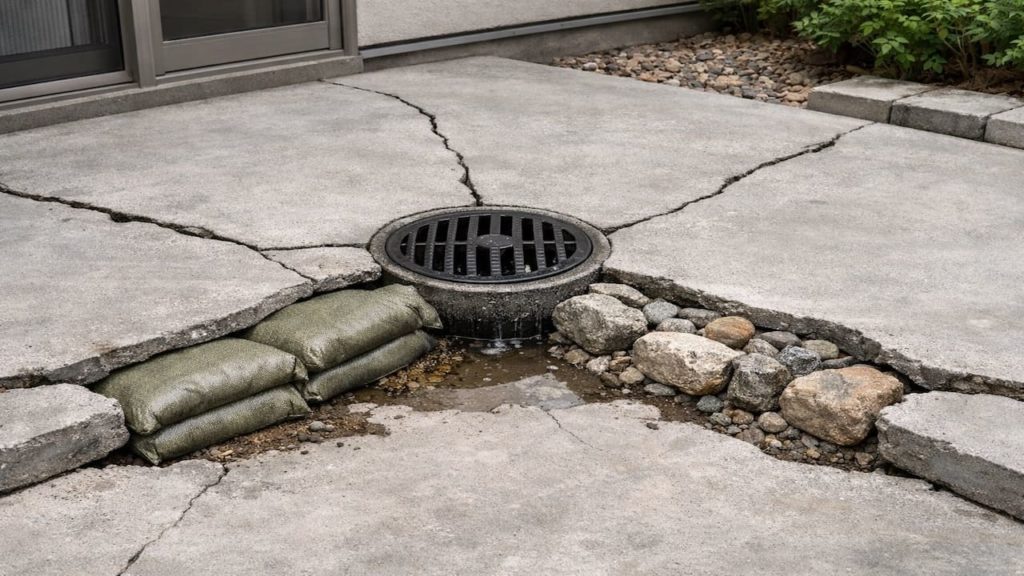
- Edges collect runoff from nearby surfaces
- Gate corners create dead zones with low airflow
Some people blame “bad soil.” It’s usually just accumulation plus moisture. Once you stop the debris layer from building, weeds lose their launchpad. The fence line becomes boring again.
4. How to keep fence lines clean with low effort
Create a clean strip then maintain it with quick passes—you’re building a system, not a chore list.
First, trim and pull weeds low, then scrape out the thin soil film and remove leaf mush along the base. Next, add a narrow barrier strip and cover it with gravel or mulch, and pin edges so it doesn’t lift. For a basic setup like fabric, pins, and a few gravel bags, plan ¥1,000–6,000 depending on length and access. After heavy rain in Japan, do a fast check for silt wash-in at corners.
- Trim and pull weeds before they flower
- Scrape soil film off the strip base
- Lay barrier with overlaps and tight pinning
- Cover with gravel to keep it dry
- Brush corners after storms to remove silt
Some folks try to spray and forget, then they still see weeds because soil keeps piling up. Barrier plus cover reduces sprouts, but you still need occasional debris removal. If weeds keep pushing through one section, that area likely has a gap, tear, or a runoff dump point that needs a small fix.
5. FAQs
Q1. Is trimming enough to keep fence lines clean?
Trimming helps, but weeds return fast if dirt and light stay. Blocking light with a narrow strip and keeping debris off it reduces repeat work a lot.
Q2. Should I use mulch or gravel along fences?
Both can work, but gravel tends to dry faster and is less likely to turn into soil. Mulch can be good if you keep it thick and stop it from washing away.
Q3. How wide should the clean strip be?
Even a narrow strip works if it blocks light fully. Start with what fits your walkway and expand only if needed.
Q4. What if weeds grow through holes near posts?
That usually means a gap in fabric or a thin spot in coverage. Patch it with overlap pieces and add cover so light can’t reach the soil.
Q5. How often do I need to maintain the strip?
In peak growth months, a quick sweep and corner brush once a week is enough. Outside rainy season, you can stretch it longer.
Pro's Tough Talk

I’ve spent 20+ years working around Japanese homes, so I’ve seen what tends to work—and what tends to go wrong—in everyday use. Fence-line weeds are what happens when you let a dust gutter become a garden bed.
Here’s the cold truth. Leaves pile up, rain packs them into soil, shade keeps it wet, and weeds move in like they pay rent. If you only trim tops, you’re basically giving them a haircut and acting shocked they’re still alive. It’s like sweeping a floor but leaving the mud in the corner.
Trim low and expose the base. Scrape out the soil film. Block light with a tight strip and cover it.
If the same section keeps returning you have a gap or runoff dump. Scene one: you open the gate and that one corner is green again, like it’s waving at you. Scene two: you step into the side yard after rain, and the fence base is damp and sticky like a swamp ribbon.
Bruh.
Summary
Fence-line weeds grow because debris and shade create a damp soil film along the base. Trimming helps, but blocking light and removing the soil film makes the clean line last.
If weeds keep returning, look for corners, gaps, and runoff points where silt refills the strip. Patch seams, keep coverage thick, and brush debris after storms.
Today trim the base and scrape the soil film off the fence strip. Once the strip is clean, block light with a narrow cover band and your fence line stays sharp with less effort.