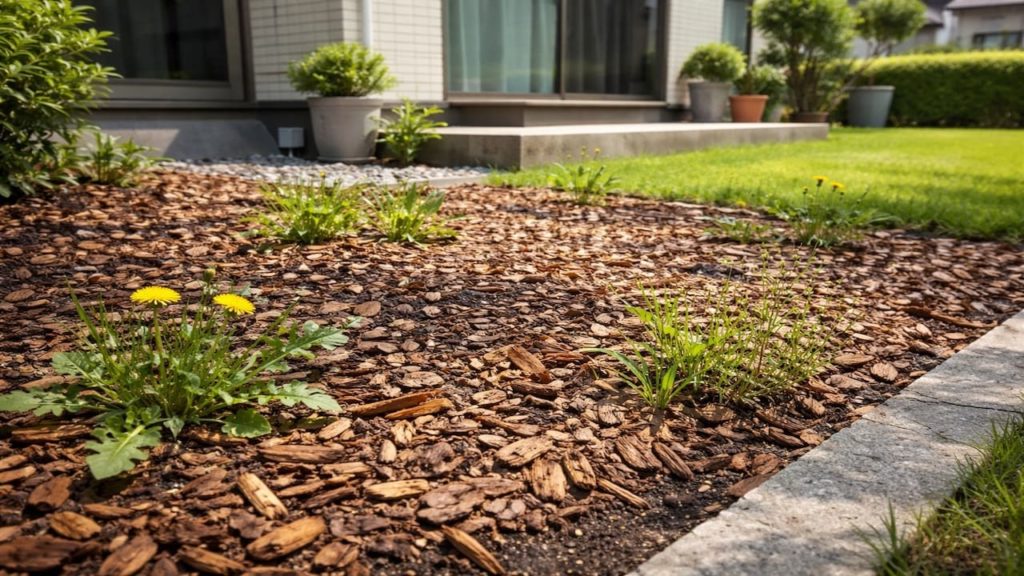
You spread mulch, step back, and expect a clean weed-free bed. Then little green tips push through like they paid rent.
Mulch can fail for simple reasons like thin spots, damp pockets, or seeds mixed into what you brought in. In Japan, rainy season humidity and windy pollen days make that failure show up fast.
In this guide, you’ll learn why weeds grow in mulch and how to stop the next wave. You’ll check thickness, moisture, and seed sources so your mulch acts like a barrier again in Japan’s small yards and tight side paths.

Hi, I’m Ken — I’m Japanese, and I live in Malaysia long-term, so I explain everyday life in Japan from a practical ‘from abroad’ perspective.
I hold a building design qualification and I’ve been on site for 20+ years across hundreds of jobs. I turn Japan’s unspoken rules into simple checks, so you can avoid costly mistakes and take the next step with clear actions that feel safe.
1. Weeds in mulch 5 checks when it fails
Mulch fails when light and fine soil reach the surface.
Mulch works by blocking light and reducing seed contact with soil—so failure usually means gaps, thin coverage, or dust filling the top. In Japan, narrow beds along fences stay shaded and damp, and that keeps the surface “alive” longer after rain. New mulch can also shift after heavy showers or strong wind, exposing bare spots. You are not imagining it.
- Scan for bare soil patches under thin mulch
- Check if mulch has turned into fine compost dust
- Look for seedlings only near edges and borders
- Pull one weed to see shallow or deep roots
- Watch where rain runoff deposits grit and silt
You might think the answer is just more mulch everywhere. More can help, but only if you fix the pattern causing thin spots and soil creep. If weeds cluster at edges, you need edge control, not a thicker pile in the middle. If weeds appear evenly, it is a seed flush and you need fast early rounds. Do the checks first.
2. Thickness moisture and seeds
Thin mulch plus constant damp is a seedbed not a shield.
Mulch that is too thin lets light hit the soil, and mulch that stays wet lets seeds stick and sprout—bad combo. In Japan, early summer humidity and light rain keep the surface moist even when you think it dried. A typical guideline is that a 2 to 4 inch layer is effective for many garden situations. According to yardandgarden.extension.iastate.edu.
- Measure depth with fingers in three random spots
- Check if water beads and sits on top
- Smell the mulch for sour wet compost odor
- Look for seed heads mixed into cheap mulch
- Notice if weeds sprout right after watering
You might say seeds only come from the wind, so mulch quality does not matter. Sometimes wind is the source, but mulch can also bring seeds in, especially if it contains fines or un-composted bits. If seedlings look uniform and tiny, that is often fresh germination, not old roots returning. If it is always damp, fix drying first or weeds will keep winning.
3. Why mulch beds still grow weeds
Weeds appear when mulch breaks down into soil-like fines.
Organic mulch decomposes, and those small particles collect on top and between pieces—then seeds finally have contact and nutrients. In Japan, rainy season downpours can wash dust into the bed, and fall leaves can rot into a thin compost layer by spring. Some weeds also creep in from lawn edges or survive as root fragments left in the soil. Then you water new plants and feed the problem.
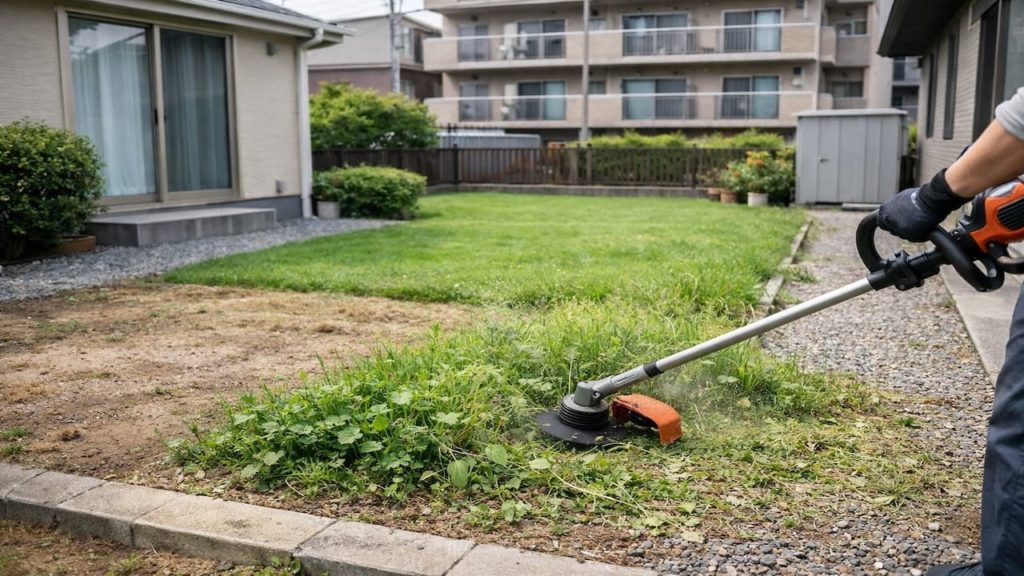
- Check lawn edges for runners creeping inward
- Look for old root pieces near new seedlings
- Watch for leaf litter turning into dark sludge
- Inspect drip lines that keep one strip wet
- Check stepping zones where mulch gets compacted flat
You might think weed fabric would solve everything. It helps sometimes, but if fine soil builds on top, weeds can root above the fabric anyway. Also, if the bed stays wet, moss and algae can form and trap more fines. Japanese gardens often have small microclimates by walls and fences, so one corner can behave totally different. Treat each zone like its own little system.
4. How to fix mulch so it blocks weeds again
Remove the seedbed layer then rebuild depth evenly.
First, clear the fine dusty top layer and any seedlings, then reset the barrier with consistent depth—no random piles. In Japan, the best time is after a dry day, so you can see where moisture really lingers. Add edging or a clean border so mulch does not drift and soil does not creep back in. Expect ¥2,000–10,000 for mulch top-up and basic edging supplies.
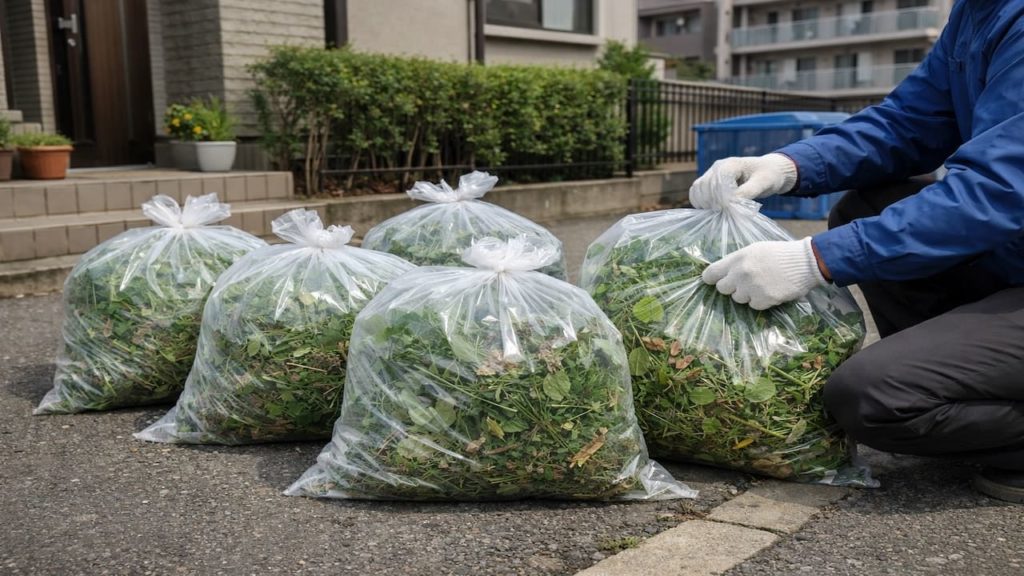
- Rake off fines and bag the weedy top layer
- Pull seedlings after rain when roots slide out
- Top up mulch to a consistent deep layer
- Install a border to stop soil washing in
- Keep drip and hose water off bare edges
You might say this is too much maintenance for something called mulch. The reality is mulch is a system, not a one-time dump. If weeds return in the same thin strip, that strip needs a border and better depth, not more pulling. If weeds return everywhere evenly, do two quick early rounds and you will cut the seed bank hard. Then it calms down.
5. FAQs
Q1. Why do weeds grow even in fresh mulch?
Fresh mulch can still have thin spots, and seeds can land on top and germinate if moisture stays high. If the top turns dusty and soil-like, it becomes a seedbed fast.
Q2. How thick should mulch be to reduce weeds?
Depth depends on mulch type and the site, but thin scatter mulch rarely suppresses weeds well. If you can easily see soil through it, it is usually too thin.
Q3. Is it better to pull weeds or add more mulch?
Do both but in the right order. Pull or rake out the seedbed first, then add mulch to an even depth so light stays blocked.
Q4. Do I need landscape fabric under mulch?
Not always, and it can create extra cleanup later if soil builds on top. Use it only where you can keep the surface clean and avoid constant dust buildup — otherwise weeds root above it.
Q5. Why do weeds show up mostly along the edges?
Edges collect runoff grit and get more light, so seeds germinate there first. A clean border and steady depth usually reduces that edge strip problem.
Pro's Tough Talk

I’ve spent 20+ years working around Japanese homes, so I’ve seen what tends to work—and what tends to go wrong—in everyday use. You’re not cursed, your mulch just got turned into a tiny farm. It happens fast, then it annoys you daily.
Here’s the cold breakdown: mulch is a blanket, but a thin blanket still lets cold through, and a wet blanket turns heavy and gross. Seeds are like glitter, once they get into the cracks, they show up forever. You water the flowers, the weeds say thanks, and nobody is the villain here, just the setup.
Rake the dusty top layer right now. Top up thin spots today. Do a full edge reset this weekend.
If weeds pop back in the same strip you fix the border. If they pop everywhere evenly, you just do two early rounds and starve the seed bank, then it gets quiet. If you keep seeing thick regrowth from one spot, dig for the old root and stop feeding it.
Seriously, stop serving weeds free snacks.
Summary
Mulch fails when it is thin, stays damp, or turns into fine soil that seeds can grab. Check depth, moisture, and where grit and leaf rot are building up.
If weeds cluster at edges, fix borders and runoff patterns first. If weeds appear evenly, treat it like a seed flush and do two early cleanup rounds.
Rake off the seedbed layer then rebuild an even mulch depth. Do the worst strip today, then keep scanning other beds so the next rain does not restart the cycle.