You want weeds gone, but you don’t want to spray chemicals around your home. You still need results, not a polite suggestion to “just pull more.”
Non-chemical control works when you use the right tools for the weed’s weak point: light, heat, and repeat pressure. In Japan, rainy season humidity and tight side yards make weeds persistent, so the method has to be consistent.
In this guide, you’ll learn how to control weeds without chemicals using simple proven moves. You’ll use mulch, heat, and cover the smart way, so regrowth slows down in Japanese yards, paths, and small garden beds.

Hi, I’m Ken — I’m Japanese, and I live in Malaysia long-term, so I explain everyday life in Japan from a practical ‘from abroad’ perspective.
I hold a building design qualification and I’ve been on site for 20+ years across hundreds of jobs. I turn Japan’s unspoken rules into simple checks, so you can avoid costly mistakes and take the next step with clear actions that feel safe.
1. Weeds without chemicals 5 tips that still work
Non-chemical weed control works when you cut light and repeat early.
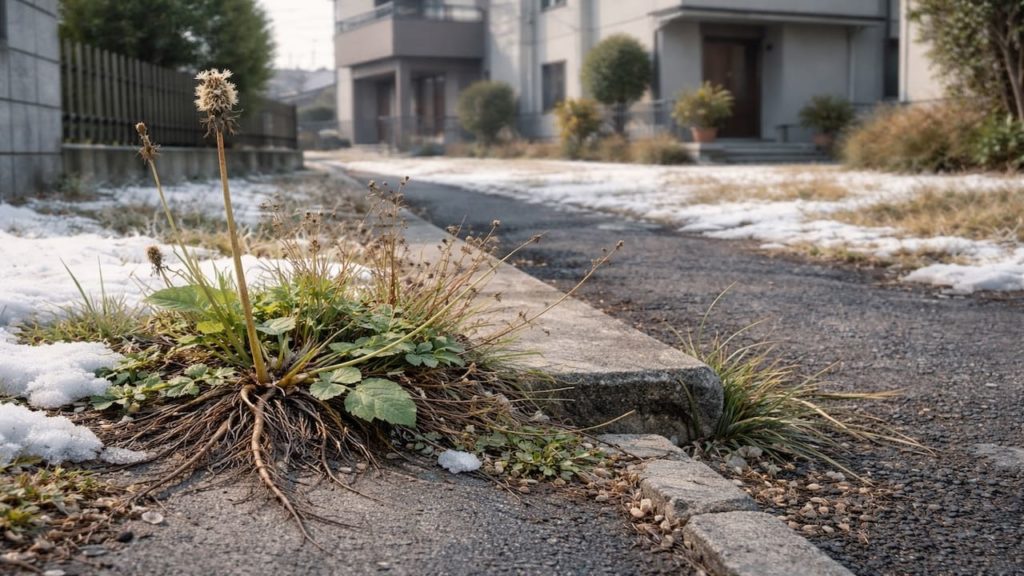
If you wait until weeds get tough, every method feels weak, so timing is the hidden weapon—start when sprouts are small. In Japan, warm rain and humid air can push a new flush in days, especially in gravel strips and seams. You don’t need perfection. You need pressure in the right places.
- Pull small weeds after rain when roots loosen
- Brush cracks weekly to remove seedbed dust
- Trim edges so sunlight dries the surface faster
- Bag seed heads before you move the plant
- Repeat quick rounds instead of one big battle
You might think “If it worked, one round should end it.” That’s not how weed banks behave, because seeds are already waiting. Two short rounds beat one long weekend of pain. Start early, then keep the surface hostile.
2. Mulch heat and cover
Use cover and heat to starve weeds of light.
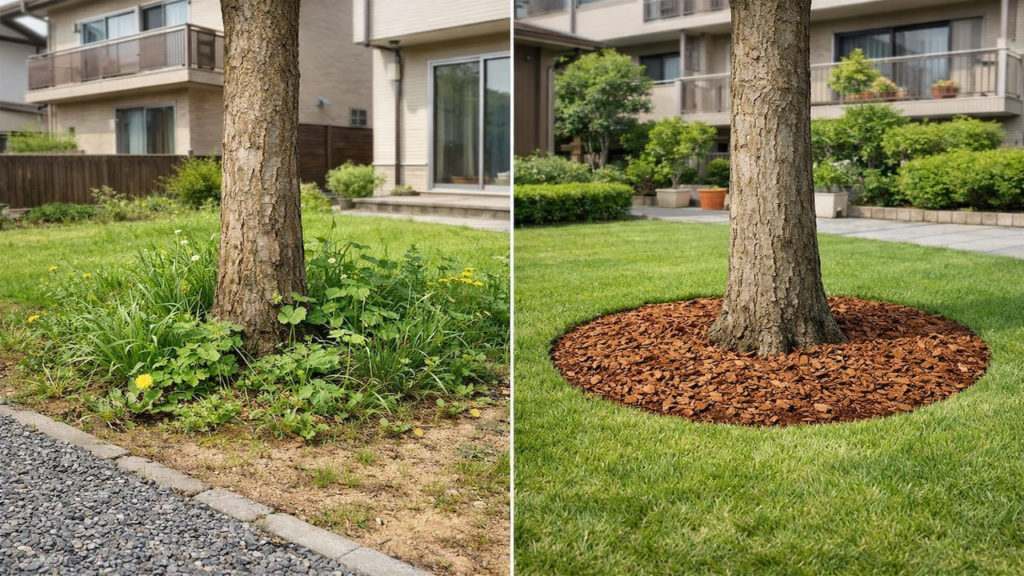
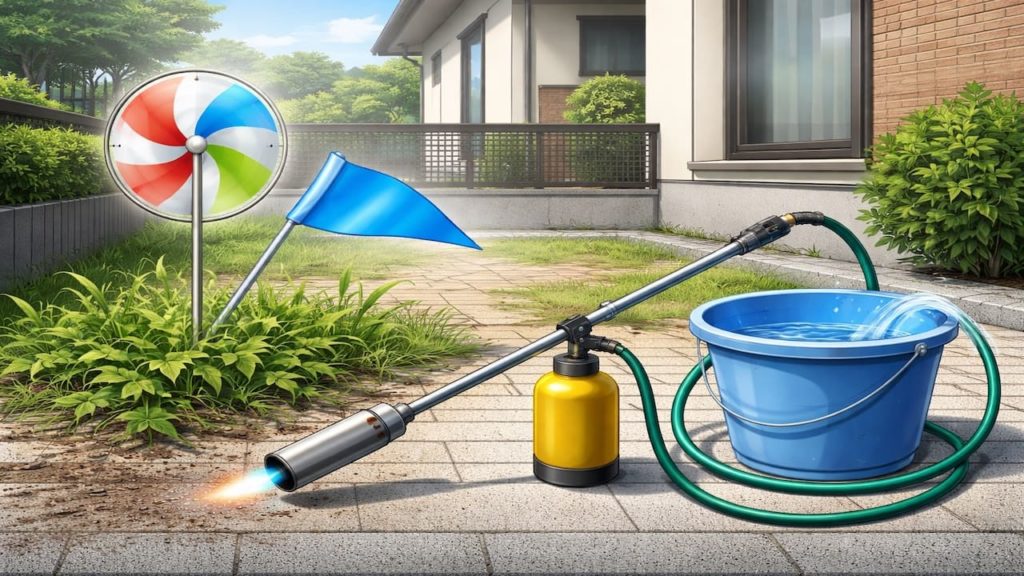
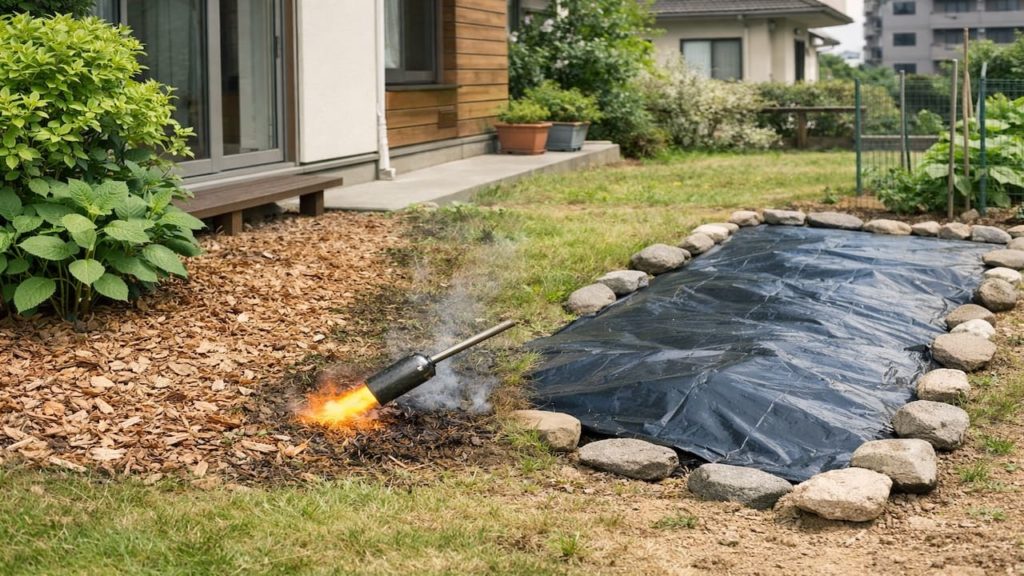
Mulch blocks light, heat stresses seedlings, and cover prevents new germination—so this is your chemical-free trio. In Japan, rainy season keeps mulch damp, so you need enough depth and a clean border so it stays a barrier, not a seedbed. For heat, hot water works best on tiny weeds in cracks when the surface can dry safely. Expect ¥1,000–5,000 for basic mulch top-up, cardboard sheets, and simple ground pins.
- Top up mulch evenly so soil never shows
- Lay cardboard under mulch to block light
- Solarize beds with clear sheet during hot weeks
- Use hot water on tiny weeds in cracks
- Cover bare soil quickly after you clear it
You might say “I tried mulch and weeds still came.” It usually failed because the layer was thin, fines built up, or edges leaked soil and light. Fix depth and containment, then cover works like it should. The goal is no sunlight on soil. Simple rule.
3. Why chemical-free methods fail in Japan
They fail because moisture and fine dust rebuild the seedbed.
Japan’s humidity and frequent rain events keep surfaces damp, and damp surfaces trap dust and pollen that turn into soil. That thin soil layer on top of mulch or fabric is enough for seeds to sprout. Add shade near fences and walls, and drying time gets even worse. Then you think the method is fake. It’s not fake, it’s maintenance-sensitive.
- Check for dust turning into soil on top
- Look for mulch sliding away from edges
- Find drip lines that keep one strip wet
- Spot shady corners that never fully dry
- Watch for leaf litter rotting into compost
You might think weed fabric solves that, but fabric still loses if you let soil build on top. If you want chemical-free control, you must keep the surface clean and dry enough. It’s more like housekeeping than warfare. That’s the honest truth.
4. How to build a routine that actually keeps weeds down
Make weed control a 10-minute habit not a monthly event.
Do tiny rounds that match the growth cycle: after rain, after mowing, and after windy days that drop debris. Use the right tool for the area: hand pull for beds, stiff brush for seams, rake for gravel, and cover for bare soil. In Japan’s small yards, one neglected corner seeds the whole place, so you guard the borders first. The cost is mostly time/effort.
- Walk the yard weekly and pull new sprouts
- Brush paving seams before weeds anchor roots
- Rake gravel to expose roots then remove
- Keep borders sharp so runners cannot creep in
- Refresh mulch before rainy season starts
You might say you don’t have time, but you already spend time being annoyed. Ten minutes prevents the 3-hour rage cleanup. If weeds keep returning in one strip, treat that strip as a system issue: shade, water path, or soil creep. Fix the system, and routine gets easier.
5. FAQs
Q1. Can I really control weeds without any chemicals?
Yes, but you must start early and repeat. Chemical-free control is about blocking light and removing seedlings before they build roots and seeds.
Q2. Is hot water a good chemical-free option?
Hot water works best on tiny weeds in cracks. It is less effective on deep roots and it can create slip risk if the surface stays wet, so timing matters.
Q3. Does mulch stop all weeds?
No, but it reduces most germination when it stays thick and clean. If dust turns the top into soil or mulch gets thin, weeds will sprout on top.
Q4. What cover works best under mulch?
Cardboard works well for many beds because it blocks light and breaks down over time. Overlap seams so light does not leak through — then top with a steady mulch layer.
Q5. Why do weeds return so fast after rain?
Rain triggers dormant seeds and softens soil, so sprouts pop quickly. That’s also the best moment to pull, because roots slide out with less damage.
Pro's Tough Talk

I’ve spent 20+ years working around Japanese homes, so I’ve seen what tends to work—and what tends to go wrong—in everyday use. If you want no chemicals, fine, but you don’t get to be lazy about timing. Weeds will take that deal and laugh.
Cold breakdown: weeds need light, a seedbed, and a little water, and Japan happily hands them all three. Mulch that turns into dusty soil becomes a welcome mat, and shade turns your yard into a damp cave. You don’t need to blame yourself, and you don’t need to hate contractors, but you do need to run the system. It’s like trying to stay dry while leaving a window open, like sweeping while someone keeps dumping sand behind you.
Pull the tiny ones right now. Cover bare soil today. Refresh mulch this weekend.
If you block light and keep the surface clean weeds slow down hard. If one strip keeps popping, you fix the border and water path first. If roots keep snapping, you switch to digging at the crown and you repeat until it weakens.
Yeah, weeds love “no chemicals” because it sounds like “no effort.”
Summary
Weeds without chemicals are controllable when you block light and remove seedlings early. Mulch, cover, and small repeat rounds beat one big cleanup.
If weeds keep returning, look for dust turning into soil, thin mulch, and damp shade zones that never dry. Fix the system, then the work drops fast.
Pull small sprouts and cover exposed soil before the next rain. Do that today, then keep scanning other spots so weeds do not rebuild the seedbed.