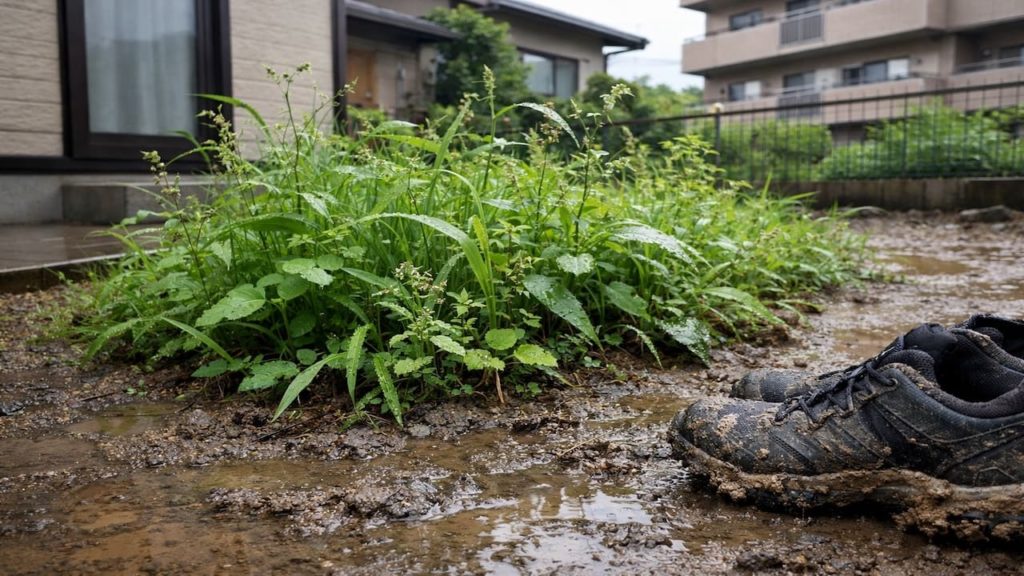
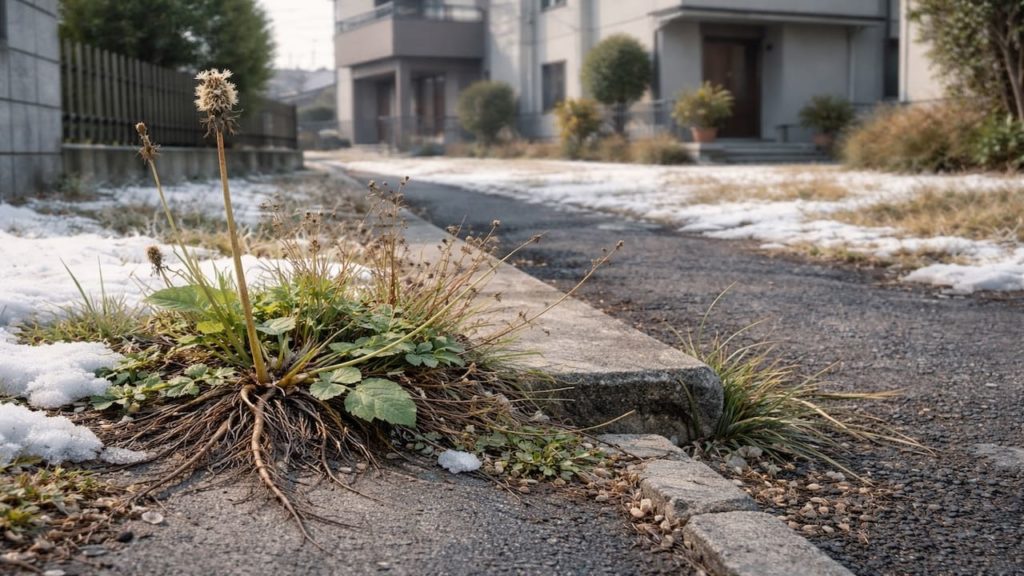
You look down at the patio and see weeds punching up through the gaps like they own the place. It ruins the clean look, and it makes sweeping feel pointless.
Patio-gap weeds usually come from light reaching dust-filled joints, plus moisture that keeps seeds alive. In Japan, humid rainy weeks and wind-blown grit make those joints refill fast.
In this guide, you’ll learn how to block light in patio gaps so weeds stop returning. You’ll use sand, sweeping, and sealing in the right order to keep joints tight in Japanese patios and small entry paths.

Hi, I’m Ken — I’m Japanese, and I live in Malaysia long-term, so I explain everyday life in Japan from a practical ‘from abroad’ perspective.
I hold a building design qualification and I’ve been on site for 20+ years across hundreds of jobs. I turn Japan’s unspoken rules into simple checks, so you can avoid costly mistakes and take the next step with clear actions that feel safe.
1. Weeds in patio gaps 5 tips to block light
Weeds stop when gaps stay dark clean and tight.
Weeds don’t need deep soil in joints, they just need a thin gritty seedbed and some light. In Japan, pollen, dust, and tiny leaf bits settle into gaps, then rain packs it down like cement. If you only pull the top, the seedbed stays, so the next sprout returns. Block light and remove the seedbed and you win.
- Pull weeds low and remove roots from joints
- Scrape out gritty soil until the gap is clean
- Sweep twice to remove dust you cannot see
- Refill joints with dry sand and compact
- Keep leaves off the patio so gaps stay clean
You might think “I already swept, so why is it back?” One sweep moves the top layer, but the fine dust stays and becomes the weed nursery. Treat joint cleaning like tooth brushing: you need consistency and the right tool. When the gap stays dark and filled, weeds struggle.
2. Sand sweep and seal
Dry sand plus a seal step blocks light better than bare gaps.
Sand works because it fills the gap and reduces light, but it only works if the joint is clean and the sand is dry when you install it. In Japan, damp air can make sand clump, so timing matters—pick a dry day and keep the surface bone dry during the work. Sealing helps lock the sand and reduce dust refilling, especially on patios that collect runoff. Expect ¥2,000–10,000 for joint sand, a stiff brush, and a small sealer if you choose to seal.
- Choose a dry day and let joints fully dry
- Brush dry sand in until gaps stop accepting it
- Compact by tapping pavers and brushing again
- Mist lightly only after sand is fully settled
- Seal joints if sand keeps washing out
You might say sealing is always required. Not always, because some patios drain well and hold sand fine. But if you see sand washing out after rain or sweeping, sealing becomes the upgrade that saves repeat work. Do it only after weeds are removed and joints are dry, or you trap problems under a film.
3. Why patio weeds return even after you pull them
They return because seeds and light are still present in the joint.
Pulling removes the plant, not the conditions that grew it. Seeds land in the joint, moisture keeps them viable, and light triggers germination—then your patio becomes a tiny farm. In Japan, shaded patios near fences stay damp longer, and that slows drying, so germination windows last longer. Plus, leaf litter breaks into fines and feeds the seedbed. Quiet cycle. Constant regrowth.
- Check if gaps face shade most of the day
- Look for dust buildup lines after strong wind
- Find where runoff deposits grit between pavers
- Notice weeds returning in the same seams
- Inspect for uneven pavers that trap debris
You might think the weeds must be coming from below the patio. Sometimes roots creep up from edges, but most patio-gap weeds are growing in the top few centimeters of gritty dust. That’s good news, because you can remove the seedbed and block light without digging the whole patio. Clean and fill beats rage pulling.
4. How to keep gaps weed-free through rainy season
Maintenance is mostly keeping dust and leaves out of the joints.
After you reset joints, your job is to prevent the seedbed from rebuilding. Quick sweeps before rain and after storms remove the grit that seeds need. In Japan, rainy season plus pollen can refill joints fast, so small frequent cleaning works better than rare deep cleaning. The cost is mostly time/effort.
- Sweep before rain so debris does not pack down
- Blow off pollen and dust after dry windy days
- Trim plants so sunlight reaches the patio surface
- Fix gutters so runoff does not hit the patio edge
- Reapply joint sand when gaps start showing light
You might say this sounds endless. It’s only endless if you let joints refill fully, because then you restart from zero. If you keep the joint surface clean, the weeds never get their seedbed back. Ten minutes beats three hours later.
5. FAQs
Q1. Is sand alone enough to stop patio-gap weeds?
It can be, if the joints are clean and the sand stays in place. If sand washes out or gaps reopen, weeds return because light and dust come back.
Q2. What if weeds keep coming back in the same line?
That line is collecting moisture and grit. Check runoff direction, shade, and uneven pavers, then clean deeper and refill with sand more tightly.
Q3. Can I seal joints without removing weeds first?
No, because you trap roots and grit under a film and it fails sooner. Remove weeds, clean joints, and let everything dry before sealing.
Q4. Do I need special polymeric sand?
Not always, but it can help reduce washout on patios with heavy rain splash. In Japan’s rainy weeks, it can be useful if your joints keep losing sand.
Q5. How often should I top up joint sand?
Check after heavy rain and after sweeping. If you can see dark open gaps again, top up before seeds settle and sprout.
Pro's Tough Talk

I’ve spent 20+ years working around Japanese homes, so I’ve seen what tends to work—and what tends to go wrong—in everyday use. Patio-gap weeds aren’t “strong,” your gaps are just feeding them light and grit. Fix the gap, and the weed drama drops.
Cold breakdown: weeds in joints live in dust, not in deep soil, and Japan gives you dust for free. Rain packs it, shade keeps it wet, and seeds land like confetti. You can’t blame yourself, and you don’t need to hate the installer, but you do need to stop leaving a tiny garden bed between every paver. It’s like trying to keep water out while leaving the lid off, like washing a dish then putting it back in the mud.
Pull and scrape the worst seam right now. Refill with dry sand today. Decide on sealing this weekend.
If gaps reopen you refill and lock them before weeds anchor. If the same seam stays wet, you fix runoff and shade first or you’ll repeat forever. If you keep seeing grit return, you sweep before rain so it doesn’t turn into joint concrete.
Yeah, your patio is not a flower bed, stop letting it act like one.
Summary
Patio-gap weeds keep returning when light reaches dust-filled joints. Remove the seedbed, refill gaps with sand, and keep joints tight and dark.
If weeds return in the same seam, check runoff, shade, and uneven pavers that trap grit and moisture. Small sweeps before rain prevent joints from turning into weed nurseries.
Scrape joints clean then refill with dry sand before the next storm. Do one quick pass today, then keep scanning the rest so weeds never rebuild the gaps.