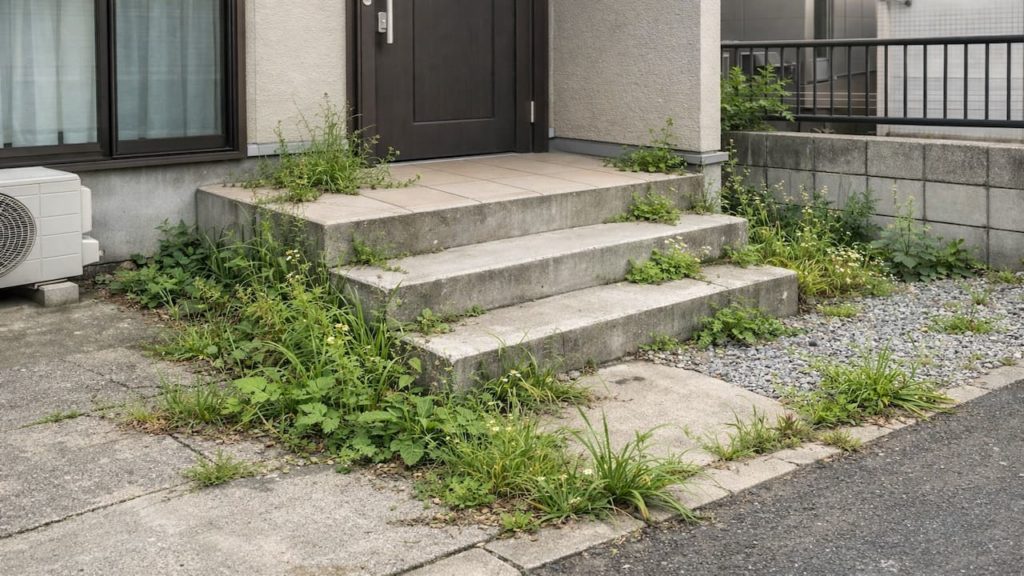
You pull weeds, feel proud for five minutes, then they come back like nothing happened. It makes you wonder if Japanese yards are just cursed.
Most repeat weeds return for predictable reasons: you pulled at the wrong time, seeds dropped, or edges keep feeding new growth. In Japan, humid rainy weeks and tight property lines make regrowth faster than you expect.
In this guide, you’ll learn how to stop weeds from coming back in Japanese yards with simple repeatable fixes. You’ll time your pulls, rebuild mulch right, and lock down edges so the weed cycle finally slows.

Hi, I’m Ken — I’m Japanese, and I live in Malaysia long-term, so I explain everyday life in Japan from a practical ‘from abroad’ perspective.
I hold a building design qualification and I’ve been on site for 20+ years across hundreds of jobs. I turn Japan’s unspoken rules into simple checks, so you can avoid costly mistakes and take the next step with clear actions that feel safe.
1. Weeds keep coming back 5 tips for Japanese yards
Regrowth drops when you target roots seeds and edges together.
If you only pull tops, weeds treat it like a haircut and return. Japanese yards often have small strips along fences, pavers, and gravel lines where dust builds into a seedbed, so weeds have endless new starting points. Add rainy season humidity and it becomes a loop. You break the loop by attacking the system, not just the plant.
- Pull after rain when soil loosens roots
- Bag seed heads before you shake the plant
- Brush seams to remove fine dust seedbed
- Track hotspots and repeat two quick rounds
- Cut back shade so surfaces dry faster
You might think you need stronger tools or stronger products. Usually you don’t, you just need better timing and better follow-through. Two short cleanups beat one long weekend battle. Repeat pressure is what kills the seed bank.
2. Pull timing mulch and edges
Pull timing and edge control decide whether weeds return.
Pulling works best when soil is moist but not muddy, because roots slide out clean instead of snapping—then you don’t leave the crown behind. Mulch blocks light, but only if it stays thick and clean, not dusty and thin. Edges matter most in Japan because fences, pavers, and narrow side yards create constant “weed lanes” where seeds settle and runners creep. The cost is mostly time/effort.
- Pull in morning after light rain not in sludge
- Press soil back down so roots cannot reanchor
- Top up mulch evenly so soil never shows
- Install a clean border to stop soil creep
- Trim edge runners before they cross the line
You might say edges are cosmetic, so who cares. Edges are where weeds recruit new members, because light hits there and debris collects there. If you lock down edges, the whole yard gets easier. If you ignore edges, you will pull forever.
3. Why weeds return fast in Japan
Humidity and fine dust rebuild a seedbed in days.
Japan’s humid air and frequent light rain keep surfaces damp, and damp surfaces trap pollen and dust that turn into soil. That thin layer is enough for seeds to sprout, especially in paver joints and gravel. Some weeds also regrow from crowns or runners you left behind when roots snapped. Then one warm week hits and it feels like you did nothing. You did something, but the seed bank did more.
- Check for dust turning into dark grit in joints
- Look for leaf litter rotting into compost on top
- Find drip lines that keep one strip constantly wet
- Notice runners creeping in from lawn edges
- Inspect low spots where water pools after rain
You might think the weeds are coming from deep underground. Most are not, most are coming from the top layer you keep allowing to form. Remove that seedbed and block light and the speed drops. The yard gets boring again.
4. How to build a low-effort routine that holds
Do small frequent passes and prevent reseeding.
Set a simple rhythm: quick pull after rain, quick sweep before storms, and a monthly edge reset. Japanese yards are small, so consistency is easier than you think, and one neglected corner can seed the whole area. Use tools that match the surface: hand pull for beds, stiff brush for seams, rake for gravel. Keep it simple and repeatable.
- Walk the yard weekly and pull new sprouts
- Sweep before rain so grit does not pack down
- Remove seed heads first then pull the plant
- Refresh mulch before rainy season starts
- Reset borders monthly so edges stay clean
You might say you don’t have time for routines. You already spend time being annoyed and stepping around weeds, so pick the smaller time. Once the seed bank drops, your routine gets lighter. That’s the payoff.
5. FAQs
Q1. Why do weeds come back right after I pull them?
Either the root crown snapped and regrew, or new seedlings sprouted from the seed bank. In Japan’s humidity, seeds germinate fast when dust and moisture build up.
Q2. When is the best time to pull weeds?
When soil is moist but not muddy. Roots come out cleaner after a light rain or morning watering, but pulling in sludge just snaps roots and spreads grit.
Q3. Does mulch really reduce weeds long-term?
Yes, if it stays thick and clean enough to block light. If dust turns the top into soil or mulch gets thin, weeds will sprout on top of it.
Q4. Why are weeds worse along fences and pavers?
Edges trap debris, get more light, and often stay damp due to shade and runoff. Those conditions create a constant seedbed and let runners creep in.
Q5. What is the fastest way to see improvement?
Stop reseeding by bagging seed heads and doing two quick early rounds. When you interrupt seed drop, the yard calms down within a few weeks.
Pro's Tough Talk

I’ve spent 20+ years working around Japanese homes, so I’ve seen what tends to work—and what tends to go wrong—in everyday use. If weeds keep coming back, it’s not because you’re weak, it’s because you’re fighting the wrong part of the system. Japan’s humidity makes that mistake loud.
Cold breakdown: weeds return by crown regrowth, fresh seedlings, and edge invasion. You pull in dry soil, roots snap, and the weed says thanks. You leave seed heads, and you just planted next month’s problem. Edges are like open doors, and mulch that turns dusty becomes a welcome mat.
You do a big cleanup on a sunny day, then it rains for two days, and the yard looks smug. You walk out in slippers to pull one “tiny weed” and come back with muddy socks. Classic.
If you time pulls right and lock edges the weed loop finally breaks. Pull when soil is moist, bag seed heads first, keep joints clean, and keep mulch thick and contained. If one strip stays wet and shady, you fix water path and airflow or you’ll repeat forever.
Yeah, weeds love your current strategy.
Summary
Weeds keep coming back in Japanese yards because humidity and dust rebuild seedbeds fast and roots regrow when they snap. The key is timing, reseed prevention, and edge control.
If weeds cluster at edges and seams, clean and block light there first. If weeds appear everywhere, do two early rounds to cut the seed bank and keep mulch thick.
Pull after light rain then reset mulch and borders in one pass. Do a quick round today, then keep scanning hotspots so the yard stays calm.