You clear weeds on a slope, then the next rain washes mulch downhill and exposes soil again. The slope turns into a mess fast, and weeds take the open soil as an invitation.
Slopes fail when water runs too fast, mulch isn’t anchored, and covers shift or tear. In Japan, sudden downpours and rainy-season saturation make washout the main enemy, not just weeds.
In this guide, you’ll learn how to prevent slope washout while controlling weeds with simple checks. You’ll pin cover, hold mulch in place, and keep the slope stable in Japanese yards where rain hits hard.

Hi, I’m Ken — I’m Japanese, and I live in Malaysia long-term, so I explain everyday life in Japan from a practical ‘from abroad’ perspective.
I hold a building design qualification and I’ve been on site for 20+ years across hundreds of jobs. I turn Japan’s unspoken rules into simple checks, so you can avoid costly mistakes and take the next step with clear actions that feel safe.
1. Weeds on slopes 5 checks to prevent washout
Slopes stay weedier when rain keeps exposing fresh soil.
If the surface keeps washing, you keep creating new bare patches where seeds can germinate. Japanese homes often have small side slopes by driveways or garden edges where runoff funnels in a narrow line. One heavy rain can undo a month of cleanup. Your first job is slowing water and holding cover.
- Check where water starts flowing first on the slope
- Check for bare streaks showing repeated runoff lines
- Check if mulch piles at the bottom after rain
- Check for loose soil that crumbles when touched
- Check if weeds cluster only in exposed patches
You might think more mulch alone will solve it. More mulch without anchoring just becomes downhill mulch. Fix water paths and anchoring first, then mulch can actually work. Otherwise you’re feeding the gutter.
2. Pins mulch and cover
Pins and a cover layer stop mulch from sliding downhill.
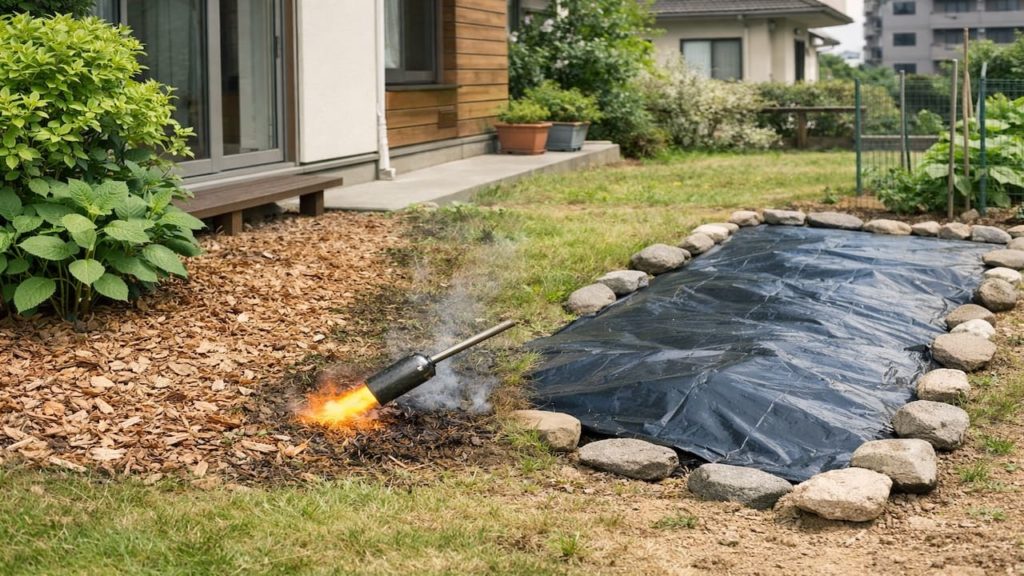
On slopes, the cover does the real holding, and mulch is the top shield that blocks light and reduces splash. In Japan’s rainy season, wind and downpours can lift edges, so you need enough pins and overlap, not just “a few.” Use biodegradable fabric, jute netting, or a solid weed barrier depending on how visible the area is. Expect ¥2,000–12,000 for ground pins, netting, and a mulch top layer.
- Overlap cover sheets so seams face downhill direction
- Pin edges tightly every short spacing along seams
- Use extra pins at the top where lift starts
- Spread mulch lightly so it does not become a slide
- Add small terraces with logs to catch mulch
You might say pins are optional because the cover is heavy. Covers still creep when soil is wet and water flows under them, and one loose corner becomes a rip. Pins are cheap compared to redoing a slope. If you see any lifting after rain, add pins immediately.
3. Why slopes wash out and weeds return
Fast runoff strips mulch and leaves seedbed lines behind.
Rainwater follows the easiest path, and once a line forms, it deepens with every storm. That line exposes soil, carries fines downhill, and leaves a gritty seedbed at edges and the slope base. In Japan, downpours can hit after long humid days, so soil is already saturated and weak. Weeds then root in the newly exposed streaks. Same streaks. Same regrowth.
- Check if downspouts dump water near the slope top
- Look for tiny channels cut into the soil surface
- Inspect for sand and fines collecting at the base
- Notice cover seams acting like water gutters
- Watch for weeds lining up along runoff channels
You might think the weeds are the main issue. On slopes, weeds are a symptom of soil movement and exposed patches. Stop soil movement, and weeds drop. If you only pull weeds, the slope still erodes and you repeat forever.
4. How to stabilize a slope and reduce weeds long-term
Slow the water and lock the surface before you fight weeds.
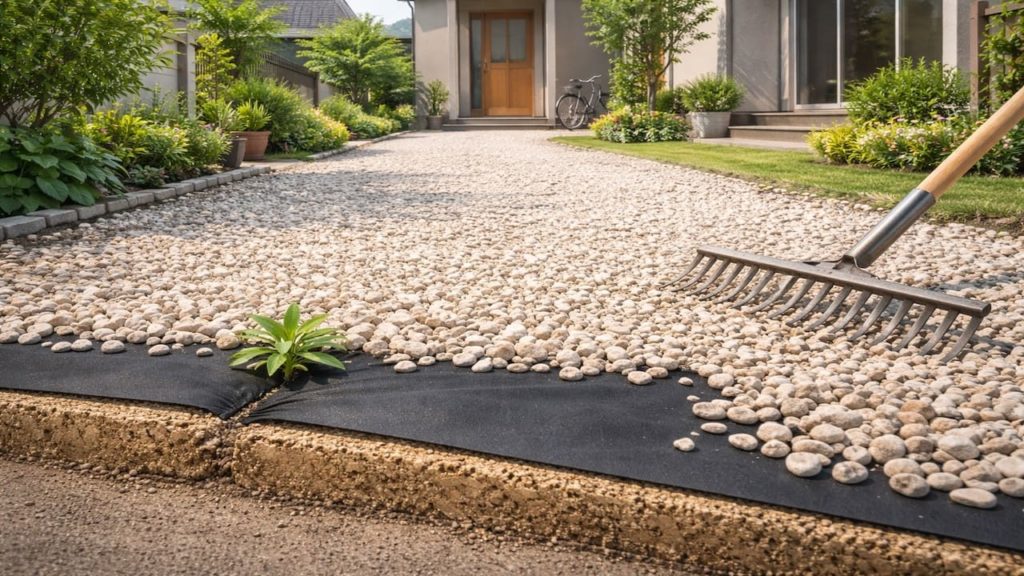
Start by redirecting or spreading runoff: move splash zones, add a small gravel strip, or break the slope into mini steps if possible. Then install cover with proper overlap and pins, and apply a thin mulch layer for light block and splash protection. In Japan, even small side slopes benefit from a simple border at the bottom so material does not escape onto paths. Expect ¥3,000–20,000 if you add edging, netting, and gravel stabilization.
- Redirect water so it does not hit one spot
- Create mini steps to break long slope runs
- Install netting cover and pin every seam tightly
- Top with mulch just enough to shade the cover
- Recheck after storms and re-pin loose edges
You might say this is too much for a small slope. A small slope can still dump mud onto your walkway and make your yard look messy, so it’s worth stabilizing once. After it’s locked, maintenance becomes a quick inspection after rain, not full rework. That’s the payoff.
5. FAQs
Q1. Is mulch alone enough on a slope?
No, not in heavy rain, because it slides and washes out. Mulch works best on slopes when it sits on a pinned cover layer that holds it in place.
Q2. What is the best cover type for slope weed control?
A pinned netting or fabric layer with proper overlap. The best type depends on visibility, but the key is anchoring and seam orientation.
Q3. How many pins do I need?
More than you think, especially at seams and the top edge where lifting begins. If you see any creep after a storm, add pins before the next rain.
Q4. Why do weeds appear in lines on the slope?
Those lines are runoff channels where soil gets exposed and seeds settle. Stop the channel with steps, spread water, and anchor the cover to break the pattern.
Q5. When should I check the slope after installation?
After the first big rain and then after each heavy storm. Early fixes keep small shifts from becoming a full washout again.
Pro's Tough Talk

I’ve spent 20+ years working around Japanese homes, so I’ve seen what tends to work—and what tends to go wrong—in everyday use. Slopes don’t forgive “good enough,” they punish it with mud and weeds. Japan’s downpours make the lesson quick.
Cold breakdown: water accelerates downhill, then it steals mulch, then it exposes soil, then weeds move in like squatters. If your cover seams act like gutters, you literally built a water slide for your soil. Don’t blame yourself and don’t blame the weather, just stop letting runoff pick one lane. Slopes are like a slippery roof, like a conveyor belt you forgot to turn off.
You fix the slope on a sunny day, then a storm hits, and you wake up to mulch at the bottom like a sad brown carpet. You step outside and your shoes sink, and you question every life choice. Classic.
If you pin the cover and break runoff lines the slope stops washing out. More mulch without anchoring is just donating mulch to the bottom edge. Redirect water, overlap seams right, pin like you mean it, then recheck after storms before the small creep becomes a rip.
Yeah, stop building weeds a downhill highway.
Summary
Weeds on slopes keep returning because washout exposes fresh soil and creates runoff channels. The first checks are water paths, bare streaks, and whether mulch is sliding to the bottom.
If you want lasting control, anchor cover with pins and overlap, then use mulch as a light-blocking top shield. Break long runoff runs with mini steps and fix downspout splash so one lane doesn’t get hammered.
Pin the cover tighter and reset mulch after the next dry day. Then keep scanning after storms so small shifts don’t become full washouts.