You look at a small garden and think it should be easy, then weeds prove you wrong. In a tight space, a few weeds make the whole area feel messy.
Small gardens get weedy fast because edges are everywhere, paths collect dust, and one neglected corner can seed the whole space. In Japan, humid weeks and rainy season spurts make that spread feel instant.
In this guide, you’ll learn how to control weeds in small gardens by using zones paths and borders. You’ll keep the garden looking clean with short routines that fit Japanese yards and narrow side spaces.

Hi, I’m Ken — I’m Japanese, and I live in Malaysia long-term, so I explain everyday life in Japan from a practical ‘from abroad’ perspective.
I hold a building design qualification and I’ve been on site for 20+ years across hundreds of jobs. I turn Japan’s unspoken rules into simple checks, so you can avoid costly mistakes and take the next step with clear actions that feel safe.
1. Weeds in small gardens 5 tips to control them
Small gardens stay clean when you control edges and seedbeds first.
A small garden is mostly border, so weeds have more entry points than you expect. Dust builds up in paths and between stepping stones, then turns into a seedbed after rain. In Japan, tight fences and walls can keep corners damp, so weeds get a head start. Control the system and the size becomes an advantage.
- Pull tiny weeds weekly before roots anchor deep
- Bag seed heads first to stop reseeding fast
- Sweep paths so dust cannot become soil
- Trim shade to help surfaces dry quicker
- Track hotspots and focus there each round
You might think you need to clear everything at once. In small gardens, consistency beats intensity, because a 10-minute loop covers most of the space. Quick repeats keep weeds small and predictable. That saves time.
2. Zones paths and borders
Divide the garden into zones and defend the borders.
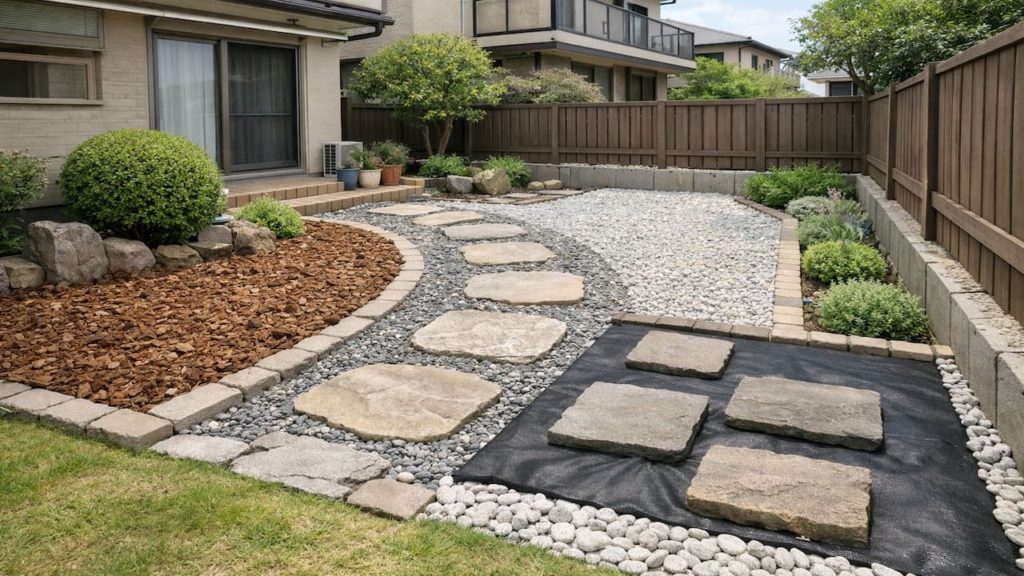
Zoning prevents the “do a bit everywhere and finish nowhere” problem. Paths are the visible area and the dust trap, borders are the weed highway, and beds are the soil factory. In Japan, gravel strips and stepping-stone joints collect fines fast, so keep paths crisp and stop soil creep at borders. The cost is mostly time/effort.
- Zone A paths and entry view area
- Zone B borders where soil meets hard surfaces
- Zone C planting beds and corners
- Clean Zone A weekly to keep it looking tidy
- Reset Zone B monthly to block invasion lines
You might say zones sound complicated for a tiny space. They simplify decisions: if you only have 10 minutes, you hit Zone A and the garden looks maintained. If you have more time, you work Zone B and you prevent spread. That’s the point.
3. Why small gardens get overrun fast
Edges collect seeds and damp spots never fully dry.
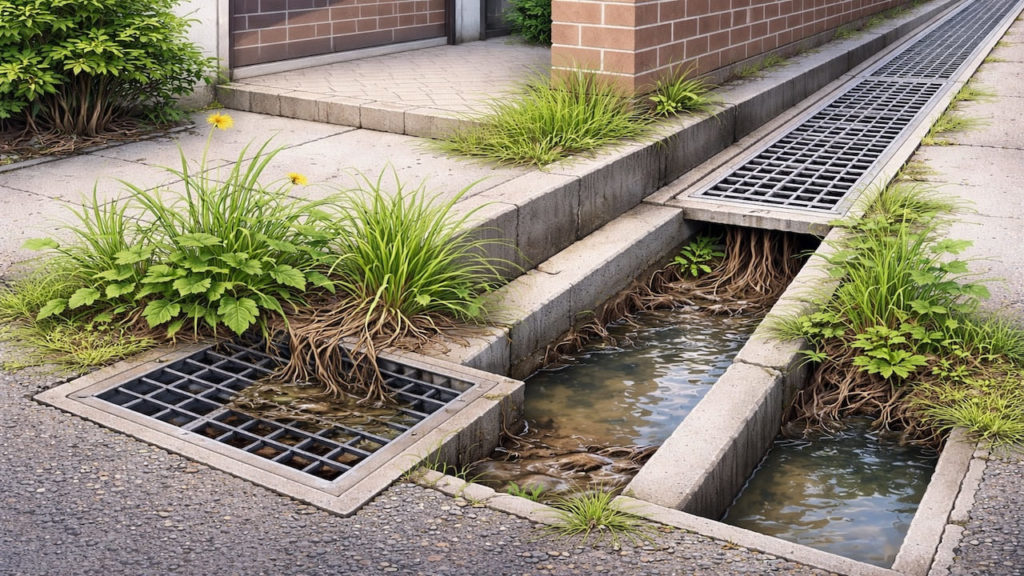
Every border is a place where dust and leaf litter pile up, and that turns into soil on top of gravel or fabric. Seeds drop there, then rain presses them in and they sprout. In Japan, humid air slows drying, so shaded corners and fence lines stay moist longer than you think. Then weeds appear in clusters and it looks like an invasion. It’s not an invasion, it’s a pattern.
- Check joints between stones for dark gritty dust
- Look for mulch thinning and exposing bare soil
- Find drip lines that keep one strip constantly wet
- Notice runners creeping in from lawn edges
- Inspect corners where stored items block airflow
You might think the solution is more pulling. Pulling helps, but if you leave the seedbed and the damp corner, you are just resetting the clock. Remove the seedbed and improve drying, and the garden calms down. That’s the lever.
4. How to set a simple routine that works
Use a 3-pass routine: pull borders sweep paths refresh cover.
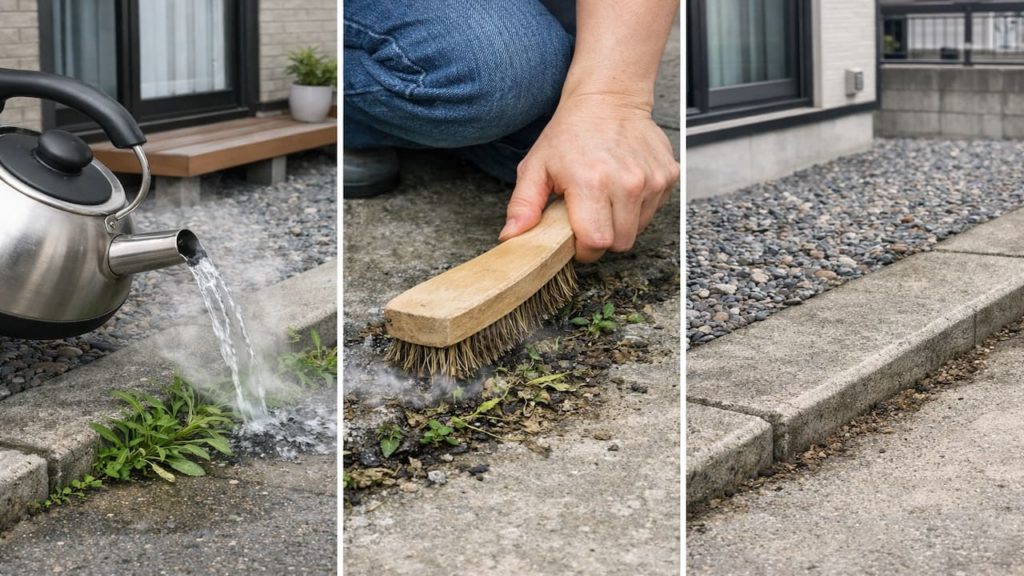
Start with borders and paths because that changes the look fastest and reduces new seedlings. Sweep before rain so dust doesn’t pack into joints, and remove leaf litter so it can’t rot into compost. In Japan, rainy season makes debris stick, so short weekly maintenance keeps the surface clean. Expect ¥500–3,000 if you add a stiff brush, small hand weeder, and a bit of mulch top-up.
- Pull border weeds first because they spread inward
- Sweep paths to remove dust and tiny seedbeds
- Top up mulch so soil never shows through
- Bag seed heads before you shake plants loose
- Do a quick check after heavy rain and wind
You might say you can only work once a month. If that’s true, you still focus on the visible paths and the main borders, and accept that bed weeds will not be perfect. That choice saves time and still keeps the garden looking controlled. Better than burnout.
5. FAQs
Q1. What is the fastest way to make a small garden look weed-free?
Clean the paths and the borders first, because those areas show mess quickly. Sweeping dust from joints also reduces new seedlings.
Q2. How often should I weed a small garden in Japan?
A short weekly pass works best in humid seasons. It keeps weeds small so pulling is quick and you avoid seed heads forming.
Q3. Should I use mulch in a small garden?
Yes, if you keep it thick enough to block light and keep leaf litter from turning into soil on top. Thin dusty mulch becomes a weed bed, so top up before rainy season.
Q4. Why are weeds worse along stepping stones and gravel?
Those areas trap fine dust and pollen which turns into soil after rain. Seeds land there and sprout in the thin gritty layer, even without deep soil.
Q5. How do I stop weeds from spreading from the edges?
Keep borders sharp, remove runners early, and prevent soil creep onto paths. If borders stay clean, the whole garden stays calmer.
Pro's Tough Talk

I’ve spent 20+ years working around Japanese homes, so I’ve seen what tends to work—and what tends to go wrong—in everyday use. Small gardens are not easier, they’re just less forgiving, because every weed is in your face. Japan’s humidity makes that worse.
Cold breakdown: weeds enter from borders, sprout in dusty paths, and explode in damp corners. You keep doing random pulling because it feels productive, but it doesn’t stop the system. Zones fix it because you defend the visible areas and the invasion lines first. It’s like keeping a tiny kitchen clean, like trying to keep white sneakers clean in the rain.
You step out to water for two minutes, then you notice weeds, then you lose 40 minutes, then you forget what you came outside to do. Been there.
If you control paths and borders the small garden stays easy. Sweep joints, top up mulch, keep edges sharp, and do short weekly passes before seed heads form. If one corner stays wet, you open airflow or you’ll keep feeding weeds there.
Yeah, stop letting a tiny garden run your schedule.
Summary
Small gardens get weedy fast because borders and paths collect dust and seeds, and damp corners dry slowly. Control weeds by focusing on zones, paths, and borders instead of pulling randomly.
If weeds keep returning, remove the seedbed dust from joints, keep mulch thick, and reset edges so runners cannot creep in. Short weekly passes prevent seed heads and save time.
Sweep the paths and clear the borders today. Then keep scanning hotspots so your small garden stays clean without big weekend resets.