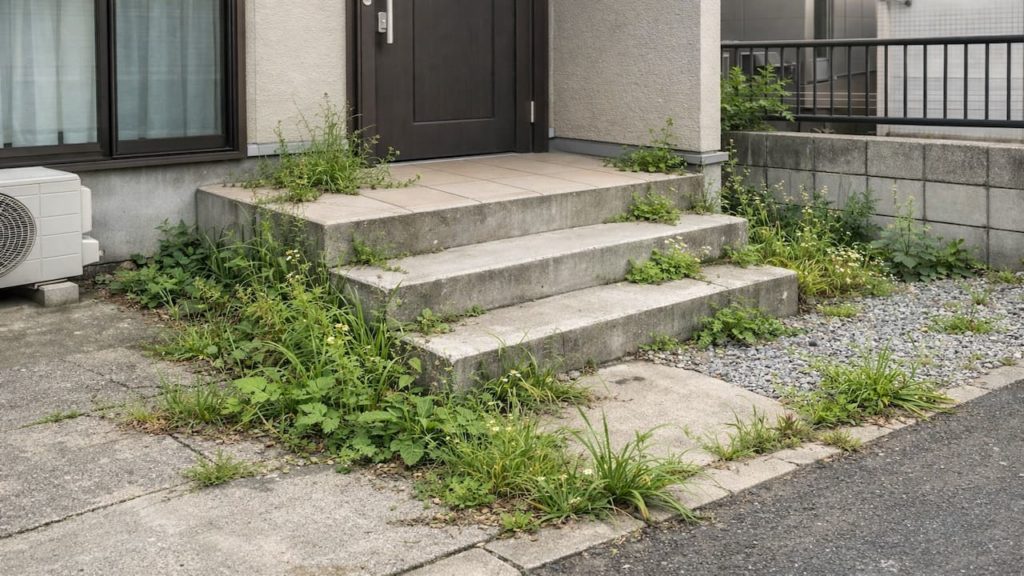
You see weeds in cracks and think a torch burner will finish the job fast. Then you picture one bad moment and a small flame turning into a real problem.
Flame weeding can work, but it has sharp safety limits. In Japan, humid summers hide dry pockets under eaves, and tight side yards put wood, vinyl, and stored stuff close to your flame.
In this guide, you’ll learn how to use a weed torch burner safely. You’ll run quick checks for wind, surfaces, water readiness, and stop rules so you do not trade weeds for smoke.

Hi, I’m Ken — I’m Japanese, and I live in Malaysia long-term, so I explain everyday life in Japan from a practical ‘from abroad’ perspective.
I hold a building design qualification and I’ve been on site for 20+ years across hundreds of jobs. I turn Japan’s unspoken rules into simple checks, so you can avoid costly mistakes and take the next step with clear actions that feel safe.
1. Weeds torch burner use 5 checks for safety
Treat a weed torch like outdoor cooking not yard work.
Most accidents happen when people aim at weeds but forget everything around them. Japan homes often have narrow paths, low fences, and plastic storage near the ground. Heat bounces off walls and keeps working after you stop the flame—slow danger. Your goal is not to burn weeds to ash, just to shock them.
- Clear dry leaves and clutter from the area
- Check nearby walls fences and stored plastics
- Confirm your flame path stays low and controlled
- Keep kids pets and laundry far away
- Plan a cooldown watch after you finish
Some say “I will be careful” and start anyway—bad plan. Use checks, not confidence, because confidence disappears when something flares. If your setup fails one check, switch to pulling or scraping.
2. Wind surface and water
Wind plus the wrong surface is how fires start.
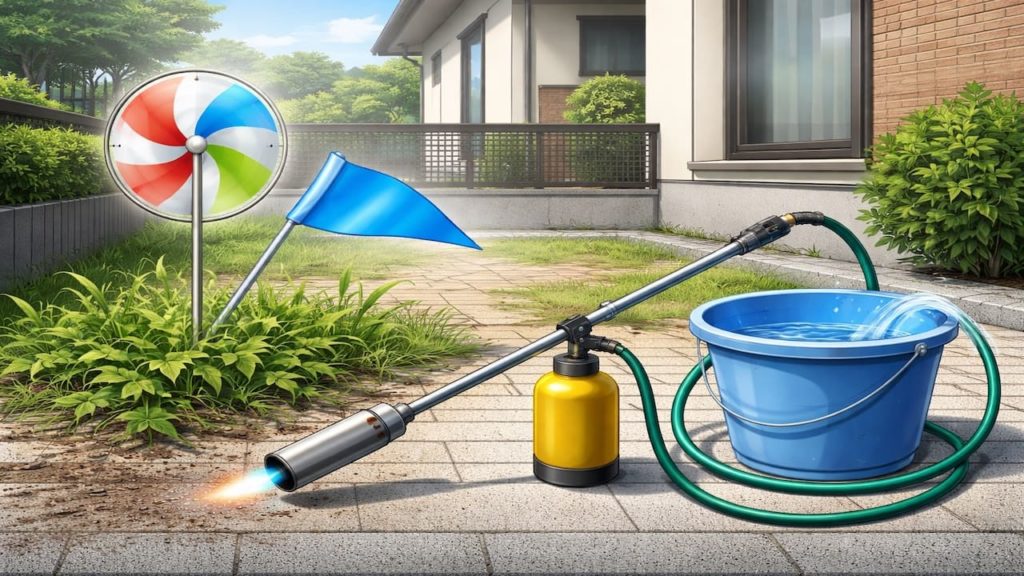
Wind tilts the flame and pushes heat into corners you are not watching. Surfaces like dry mulch, wood decking, or old grass can catch from heat you did not notice. Keep water ready before you light up—do not treat it as an afterthought. Never flame weeds in windy conditions and keep an extinguisher or other means ready. According to ucanr.edu.
- Skip torching when wind moves branches nearby
- Only torch on bare concrete stone or metal
- Wet down the edge zones before starting
- Keep a hose bucket or extinguisher within reach
- Stop if flame flickers sideways even briefly
You might think “it is damp today so it is safe.” Not always. Damp air can hide dry debris under a carport roof and along wall bases. If you cannot control wind and surface, you are gambling.
3. Why torch weeding gets dangerous around homes
Hidden fuel and trapped heat make flare ups fast.
Dry leaves collect in corners, under planters, and behind stored items, so the fuel is invisible until it lights. Heat can travel through cracks and reach dry dust, dead moss, or old mulch under the top layer. In Japan, eaves and narrow alleys block wind, so heat lingers instead of dissipating—then you walk away too soon. The danger is not the weed, it is everything near it.
- Check corners under steps and behind planters
- Look for dry leaf dust packed in cracks
- Confirm no mulch bark or dead moss nearby
- Test surface temperature with a quick water mist
- Watch for smoke smell after flame is off
People argue that flame weeding is safer than chemicals. Maybe, but only when you control the environment. If your home layout is tight and cluttered, the risk jumps, and the smart move is a non-flame method.
4. How to use a weed torch burner without accidents
Use brief heat pulses then stop and inspect.
Work in short zones and keep your safety kit ready, and expect ¥100–500 for basic supplies like a spray bottle and simple gloves. Use the flame for 1 to 2 seconds per spot, then move on, because you are stressing the weed, not trying to roast it. Wait and watch after each small section—heat can keep spreading under debris. If anything smells like hot plastic or dry leaves, you stop and reset.
- Start on the safest hard surface area first
- Use quick passes not long continuous flame
- Mist edges and corners before each section
- Do a slow scan after every two minutes
- Stay on site for a final cool down check
Some say “I will just finish this one strip” when they feel momentum. That is how trouble starts. If you cannot keep the work slow and inspected, do not torch today, and do not feel bad about it.
5. FAQs
Q1. What surfaces are safest for a weed torch burner?
Bare concrete and stone are the safest surfaces because they do not ignite. Avoid wood decking, mulch, and dry soil edges, and treat unknown surfaces as risky.
Q2. Do I need water even if I have an extinguisher?
Yes, because water is fast for cooling hot cracks and leaf dust. Keep both if you can, and keep them ready before you ignite anything.
Q3. Can I torch weeds right after rain?
Sometimes, but rain does not soak everything evenly. Wet air can still leave dry pockets under roofs—so you still do the surface and debris checks.
Q4. How do I know I used enough heat?
You do not need flames on the plant for long. If the weed looks slightly dull or limp later, that usually means the heat shock worked.
Q5. What is the biggest beginner mistake?
Holding the flame too long and walking away too soon. Keep it brief, scan the area, and stay to watch for delayed smoke.
Pro's Tough Talk

I’ve spent 20+ years working around Japanese homes, so I’ve seen what tends to work—and what tends to go wrong—in everyday use. A weed torch is not a toy, and it is not a macho shortcut. One lazy moment and you are chasing a tiny flame like it owes you money.
Here’s the cold breakdown. Wind tilts flame into places you are not watching. Heat crawls under leaf dust, then pops up later like a bad surprise. Tight home layouts trap heat, so you think it is fine, then it bites you. Your brain focuses on the weed, but fire only cares about fuel.
Right now, clear the zone and stage water.
Today, torch only on hard surfaces with quick pulses.
This weekend, switch to scraping for risky corners.
If you cannot control wind and fuel do not torch. If you did everything right and still smell hot plastic or see smoke haze, that is your line, you stop and cool it down before you touch anything else.
No, you are not being dramatic.
Everybody has that “just one more crack” moment, then the wind shifts. And everybody has that “I will carry the hose later” moment, until they need it now. Don’t be the person who learns fire safety because of weeds.
Summary
Weed torch safety starts with wind, surface, and water readiness, not the burner settings. Hard surfaces and short heat pulses keep the job controlled.
If your area is tight, cluttered, or near dry debris, switch methods and skip the flame. If anything smells hot after you stop, cool it and watch the area before you leave.
Today, run the wind surface and water checks before lighting. Once you lock that habit in, you can handle other yard tasks with the same safe rhythm.