You look down at your artificial turf and notice weeds popping up like they own the place. It feels unfair because you paid for “low maintenance,” not surprise gardening.
Weeds can still sneak in through edges, seams, and blown dust that turns into soil. In Japan, summer humidity and sudden downpours speed that buildup, especially in small yards where runoff brings grit.
In this guide, you’ll learn how to find why weeds grow in artificial turf. You’ll check edges, infill, and drainage, then lock in simple fixes that keep the surface clean longer.

Hi, I’m Ken — I’m Japanese, and I live in Malaysia long-term, so I explain everyday life in Japan from a practical ‘from abroad’ perspective.
I hold a building design qualification and I’ve been on site for 20+ years across hundreds of jobs. I turn Japan’s unspoken rules into simple checks, so you can avoid costly mistakes and take the next step with clear actions that feel safe.
1. Weeds in artificial turf 5 checks
Most turf weeds start where dust and light meet.
Artificial turf blocks a lot, but it does not block wind-blown dirt forever—once a thin layer of dust sits on top, seeds can sprout. Japan’s rainy season splashes soil onto the surface, then humidity keeps it damp longer than you expect. If you only pull the green tops, roots hide in the gritty layer and come right back. The first win is identifying the entry point instead of fighting symptoms.
- Inspect perimeter for gaps between turf and border
- Check seams for lifting and fine dust lines
- Look for low spots holding water after rain
- Brush fibers upright to expose hidden sprouting
- Remove leaf litter that turns into soil
You might assume weeds mean the turf product is bad. Not always, because even good turf fails if dirt accumulates and water sits. Treat it like a surface system, not a carpet. Fix entry and moisture, then pulling actually works.
2. Edges infill and drainage
Edges and wet infill are the main weed factories.
Edges collect dust, petals, and mower debris, then it compacts into a thin soil band—seeds love that. In Japan, typhoon-style rain pushes gritty runoff under borders and makes infill migrate, creating soft pockets where weeds anchor. Poor drainage keeps the base damp, so even tiny seeds can survive. If the edge line stays dry and tight, weed pressure drops fast.
- Seal edge gaps using a firm border strip
- Top up low infill to stop fiber collapse
- Brush infill evenly so water flows outward
- Clear drains and channels before the next storm
- Trim nearby plants to reduce seed drop
Some people focus only on the center because it looks worst. But the center usually weeds last, while edges weed first. If you keep chasing the middle, you will keep losing. Fix the border and water path, then the center calms down.
3. Why weeds show up in artificial turf
Weeds grow when dust creates soil and sun hits it.
Artificial turf does not magically remove seeds, it just makes it harder for them to settle. The real problem is the dirt layer that forms from sand, pollen, leaves, and tiny debris over time—then roots grab it like real ground. In Japan’s hot, humid summer, that layer stays moist, so germination becomes easier. Add a bright edge line or a seam gap, and sunlight gives weeds the last piece they need.
- Notice fine grit buildup in fiber bases
- Check if weeds cluster along sunny borders
- Look for seam lines that catch blown dirt
- Spot areas where leaves rot into dark crumbs
- Test runoff direction using a quick water pour
You may hear “turf means no weeds,” and that sells installs. Reality is different, because any outdoor surface collects dirt. The good news is weeds on turf are usually shallow and beatable. Reduce soil buildup and light entry, and regrowth slows a lot.
4. How to stop weeds in artificial turf long term
Clean the surface and protect edges on a schedule.
Start with a simple routine that prevents dirt from becoming soil—then weed seeds have nothing to live in. In Japan, do it more often during the rainy season because debris sticks and base moisture stays high. The cost is mostly time/effort, especially if you already have a stiff broom and a hose. Think maintenance, not one big reset.
- Brush turf weekly to lift fibers and debris
- Rinse lightly after storms to move fine grit
- Pull sprouts early before roots knit into dust
- Clear border channels so runoff exits fast
- Remove leaves immediately before they break down
You might want to use harsh chemicals to “end it.” That can backfire if runoff spreads it to soil beds or you damage nearby plants. Most turf weeds are beatable with boring consistency and edge control. Keep it dry, keep it clean, and your turf stays close to zero-weed.
5. FAQs
Q1. Do weeds mean my turf base was installed wrong?
Not always, most weeds come from dirt buildup on top. If weeds cluster in one soggy zone, though, that can point to a drainage or low spot issue.
Q2. Should I pull weeds or cut them?
Pulling is usually best because turf weeds tend to be shallow. Cut only if the root is tangled, then brush and rinse the dust layer.
Q3. Can I use boiling water on turf weeds?
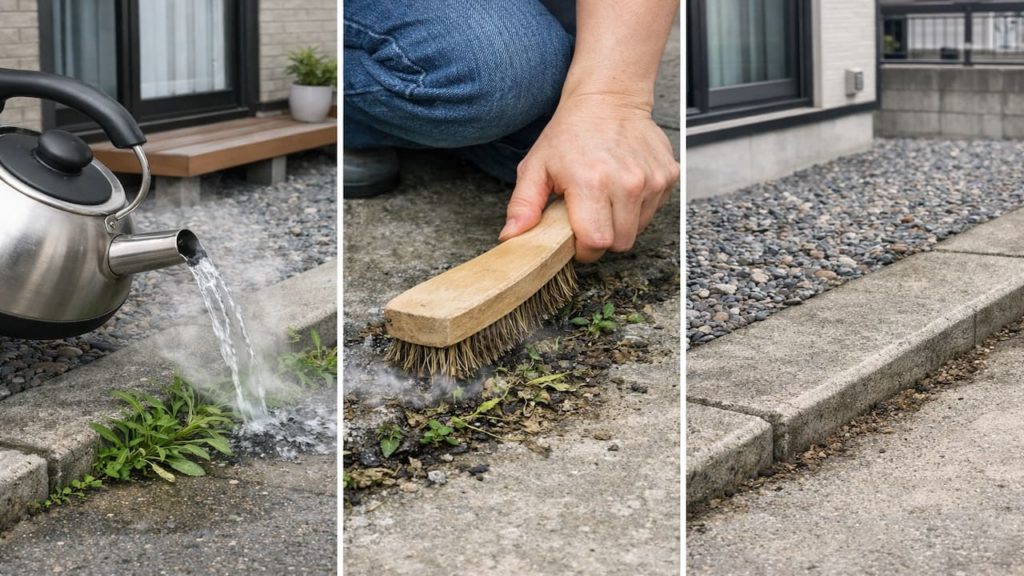
Be careful because heat can warp fibers depending on material and temperature. If you try it, test a tiny hidden area—then stop if fibers soften.
Q4. Why do weeds always show up at the edges?
Edges trap dust and get more light and airflow, so seeds land and sprout there first. Tight borders and regular debris removal reduce that edge band fast.
Q5. How often should I brush artificial turf?
Weekly in high-debris seasons works well, and less often in calm months. If you see grit collecting at the fiber base, increase frequency.
Pro's Tough Talk

I’ve spent 20+ years working around Japanese homes, so I’ve seen what tends to work—and what tends to go wrong—in everyday use. Turf weeds don’t mean you’re sloppy, it means nature is stubborn and dust is sneaky. In humid summer air, that dust turns into soil fast.
Here’s the cold breakdown. Dirt lands, dirt packs, seeds land, and the edge line becomes a nursery. Seams lift a hair, light slips in, and weeds throw a party. It’s like laying a clean towel on a dirty floor and acting shocked it gets dusty. It’s like putting a lid on soup and calling it “dry.”
Right now, pull the sprouts and bag them.
Today, brush the turf and clear the border line.
This weekend, fix low spots and reset the water path.
If weeds return in the same wet zone you have a drainage problem. If they pop up everywhere evenly, your issue is surface dirt buildup, not the base. When you keep seeing weeds along one seam after cleaning, that seam needs attention, period.
Seriously?
You know that moment when you step outside barefoot and feel grit under your foot like sandpaper. And you know that other moment when you blow leaves off once, then the next storm drops a new layer overnight. Keep the routine, or the turf will keep trolling you.
Summary
Weeds on artificial turf usually start from dust buildup, edge gaps, and poor drainage. Check borders, seams, and low spots before you blame the turf itself.
Brush and remove debris often, especially in wet seasons, and pull sprouts early. If weeds repeat in one soggy area, fix the water path instead of doing endless cleanup.
Today, clear the edges and brush out the dirt layer. Once that becomes your habit, your turf stays cleaner and your yard work stays small.